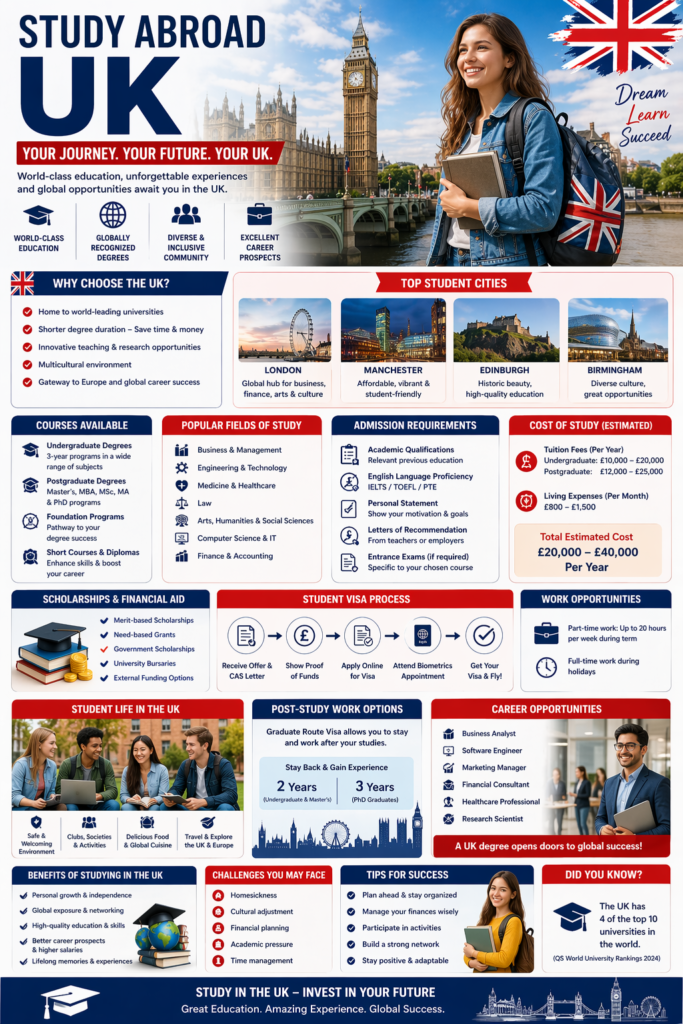
Studying abroad is more than just earning a degree—it’s an experience that transforms your perspective, shapes your personality, and opens doors to global opportunities. Among the most sought-after destinations in the world, the united kingdom stands tall as a hub of academic excellence, cultural diversity, and career advancement.
From centuries-old universities to modern, innovative campuses, the UK offers an unmatched educational environment. Whether you dream of walking through historic halls, engaging with world-class faculty, or building an international career, studying in the UK can be your gateway to success.
This comprehensive guide explores everything you need to know about studying abroad in the UK—benefits, costs, universities, lifestyle, career opportunities, and much more.
Why Choose the UK for Studying Abroad?
The UK has long been a preferred destination for international students—and for good reason.
1. World-Class Education
The UK is home to some of the most prestigious institutions in the world, including:
University of Oxford
University of Cambridge
Imperial College London
These universities are known for academic excellence, research innovation, and global influence.
2. Globally Recognized Degrees
A UK degree is respected by employers worldwide. It reflects high standards, critical thinking, and practical knowledge.
3. Shorter Course Duration
Compared to many countries:
- Undergraduate degrees: 3 years
- Master’s degrees: 1 year
This saves both time and money.
4. Cultural Diversity
The UK welcomes students from all over the world, creating a multicultural environment that enriches your experience.
5. Strong Career Prospects
Graduating from a UK university significantly boosts your employability and career growth.
Popular Study Destinations in the UK
Each city in the UK offers a unique student experience.
London
- Global financial hub
- Home to top universities
- Vibrant lifestyle and networking opportunities
Manchester
- Affordable living
- Strong student community
- Excellent universities
Edinburgh
- Historic charm
- High-quality education
- Beautiful landscapes
Birmingham
- Diverse culture
- Central location
- Growing academic reputation
Types of Courses Available
The UK offers a wide range of academic programs tailored to different career paths.
Undergraduate Degrees
Ideal for students starting their higher education journey.
Postgraduate Degrees
Includes:
- Master’s (MBA, MSc, MA)
- PhD programs
Foundation Programs
Designed for international students who need academic preparation before a degree.
Short Courses
Skill-based programs that enhance professional development.
Popular Fields of Study
Students from around the world choose the UK for its diverse academic offerings.
Business and Management
Highly popular due to global career opportunities.
Engineering and Technology
Strong focus on innovation and research.
Medicine and Healthcare
Renowned for advanced training and facilities.
Law
UK law degrees are respected internationally.
Arts and Humanities
Ideal for creative and academic pursuits.
Admission Requirements
While requirements vary, most universities expect:
Academic Qualifications
- High school certificate (for undergraduate)
- Bachelor’s degree (for postgraduate)
English Language Proficiency
Tests such as IELTS or TOEFL are usually required.
Personal Statement
A key document explaining your goals and motivation.
Letters of Recommendation
From teachers or employers.
Entrance Exams
Some programs may require additional tests.
Cost of Studying in the UK
Studying abroad requires financial planning.
Tuition Fees
- Undergraduate: £10,000–£20,000 per year
- Postgraduate: £12,000–£25,000 per year
Living Expenses
- £800–£1,500 per month (depending on city)
Total Estimated Cost
Approximately £20,000–£40,000 per year.
Scholarships and Financial Aid
Many universities and organizations offer financial support.
Types of Scholarships
- Merit-based scholarships
- Need-based grants
- Government-funded programs
These can significantly reduce the financial burden.
Student Visa Process
To study in the UK, international students need a student visa.
Key Requirements:
- Confirmation of Acceptance for Studies (CAS)
- Proof of funds
- English proficiency
- Valid passport
The visa process is straightforward if documents are prepared correctly.
Student Life in the UK
Studying in the UK is not just about academics—it’s about experience.
Accommodation Options
- University dormitories
- Private housing
- Shared apartments
Social Life
Students enjoy:
- Clubs and societies
- Cultural events
- Travel opportunities
Food and Lifestyle
The UK offers a mix of international cuisines, making it easier for students to feel at home.
Work Opportunities for Students
International students can work part-time while studying.
Work Limits
- Up to 20 hours per week during term
- Full-time during holidays
This helps students gain experience and manage expenses.
Post-Study Work Opportunities
The UK offers a Graduate Route Visa, allowing students to stay and work after graduation.
Duration:
- 2 years (undergraduate & master’s)
- 3 years (PhD graduates)
This is a major advantage for building an international career.
Career Opportunities After Graduation
A UK degree opens doors across industries.
Popular Career Paths:
- Business Analyst
- Software Engineer
- Marketing Manager
- Financial Consultant
- Healthcare Professional
Graduates often secure roles in multinational companies.
Benefits of Studying Abroad in the UK
1. Personal Growth
Living abroad builds independence and confidence.
2. Global Exposure
Interact with people from different cultures.
3. Skill Development
Enhance communication, problem-solving, and adaptability.
4. Networking Opportunities
Build connections with global professionals.
5. Career Advancement
Improve job prospects and earning potential.
Challenges of Studying Abroad
While rewarding, studying abroad comes with challenges.
Homesickness
Being away from family can be difficult initially.
Cultural Adjustment
Adapting to a new environment takes time.
Financial Pressure
Managing expenses requires careful planning.
Academic Expectations
UK education emphasizes independent learning.
Tips for Success
To make the most of your UK study experience:
Plan Ahead
Research universities, courses, and requirements early.
Manage Finances
Create a budget and track expenses.
Stay Organized
Keep academic deadlines in check.
Build Connections
Network with classmates and professionals.
Explore the Country
Travel and experience UK culture.
Future of Studying in the UK
The UK continues to evolve as a global education leader.
Key Trends:
- Increased focus on digital learning
- More international collaborations
- Growing support for international students
These developments make the UK an even more attractive destination.
Is Studying in the UK Worth It?
Yes—absolutely.
Studying abroad in the UK is an investment in your future. It provides not just a degree, but a life-changing experience that shapes your career and personality.
With world-class education, global recognition, and strong career opportunities, the UK remains one of the best choices for international students.
Conclusion
Choosing to study abroad in the united kingdom is a bold and rewarding decision. It offers a perfect blend of academic excellence, cultural diversity, and career growth.
From top-ranked universities to vibrant student life, the UK provides everything you need to succeed in a globalized world.
If you are ready to step out of your comfort zone and invest in your future, studying in the UK could be the opportunity that transforms your life forever.