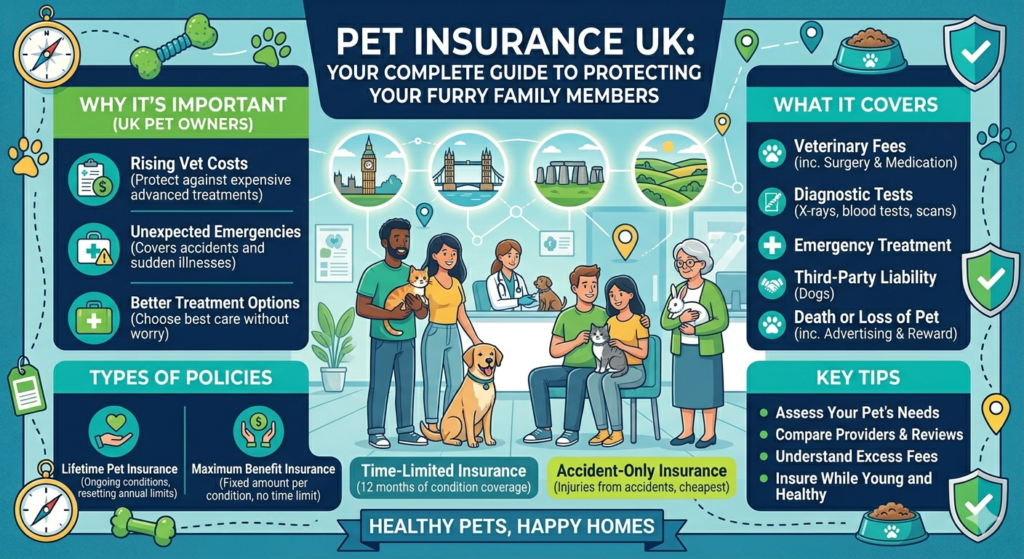
Pets are more than just animals — they are family. Whether it’s a loyal dog greeting you at the door, a playful cat curling up beside you, or a small furry companion bringing joy to your home, pets enrich our lives in countless ways. But just like humans, pets can get sick or injured, and veterinary care in the UK can be expensive.
This is where pet insurance in the UK becomes essential. It offers financial protection and peace of mind, ensuring that your beloved pet receives the best possible care without putting a strain on your finances.
In this comprehensive guide, we’ll explore everything you need to know about pet insurance in the UK — from types of policies to costs, benefits, and how to choose the best coverage.
What is Pet Insurance?
Pet insurance is a policy that helps cover the cost of veterinary treatment if your pet becomes ill or injured. Depending on the level of coverage, it can also include:
- Routine care
- Dental treatment
- Third-party liability (for dogs)
- Lost or stolen pet support
Essentially, pet insurance works similarly to health insurance for humans, helping you manage unexpected medical expenses.
Why is Pet Insurance Important in the UK?
Veterinary costs in the UK have increased significantly in recent years. Even basic treatments can be costly, while serious conditions can run into thousands of pounds.
Key Reasons to Get Pet Insurance:
1. Rising Vet Costs
Advanced medical treatments, surgeries, and diagnostics are expensive.
2. Unexpected Emergencies
Accidents and illnesses can happen at any time.
3. Better Treatment Options
Insurance allows you to choose the best care without worrying about cost.
4. Peace of Mind
You can focus on your pet’s recovery instead of finances.
Types of Pet Insurance in the UK
Understanding different policy types helps you choose the right one.
1. Lifetime Pet Insurance
This is the most comprehensive type of coverage.
Features:
- Covers ongoing conditions year after year
- Annual limit that resets each year
Best for:
- Long-term illnesses like arthritis or diabetes
2. Maximum Benefit Insurance
Provides a fixed amount per condition with no time limit.
Features:
- Covers each illness up to a set amount
- Stops once the limit is reached
3. Time-Limited Insurance
Covers conditions for a limited period (usually 12 months).
Features:
- Lower premiums
- Limited long-term coverage
4. Accident-Only Insurance
Covers injuries caused by accidents only.
Features:
- Cheapest option
- No illness coverage
What Does Pet Insurance Cover?
Coverage varies depending on the policy, but most plans include:
1. Veterinary Fees
- Consultations
- Surgery
- Medication
- Hospital stays
2. Diagnostic Tests
- X-rays
- Blood tests
- MRI scans
3. Emergency Treatment
- Immediate care for accidents or sudden illness
4. Third-Party Liability (Dogs)
- Covers legal costs if your dog injures someone or damages property
5. Death or Loss of Pet
- Compensation if your pet dies or is stolen
6. Advertising & Reward
- Helps cover the cost of finding lost pets
What is Not Covered?
It’s important to understand exclusions:
- Pre-existing conditions
- Routine check-ups (unless added)
- Vaccinations
- Grooming
- Pregnancy-related costs
How Much Does Pet Insurance Cost in the UK?
The cost depends on several factors:
Key Pricing Factors:
- Pet’s age
- Breed
- Location
- Type of policy
- Coverage level
Average Monthly Costs:
- Dogs: £15–£60+
- Cats: £10–£40+
Certain breeds may cost more due to higher health risks.
Cheap vs Comprehensive Pet Insurance
Cheap Policies:
- Lower monthly premiums
- Limited coverage
- Higher excess
Comprehensive Policies:
- Higher cost
- Better long-term protection
- Covers chronic conditions
👉 Choosing the cheapest option may cost more in the long run.
How to Choose the Best Pet Insurance in the UK
Making the right choice requires careful consideration.
1. Assess Your Pet’s Needs
Different pets have different health risks.
2. Compare Providers
Look at multiple insurers before deciding.
3. Check Coverage Limits
Ensure the policy covers major treatments.
4. Understand Excess Fees
Know how much you’ll pay per claim.
5. Read Reviews
Customer feedback can reveal hidden issues.
Pet Insurance for Dogs vs Cats
Dog Insurance:
- Usually more expensive
- Includes liability cover
- Higher risk of accidents
Cat Insurance:
- Generally cheaper
- No liability cover needed
- Lower risk profile
Pet Insurance for Older Pets
Older pets are more likely to need medical care, making insurance crucial — but also more expensive.
Tips:
- Insure early to avoid exclusions
- Choose lifetime policies
- Expect higher premiums
Pre-Existing Conditions Explained
A pre-existing condition is any illness or injury your pet had before getting insured.
Important Notes:
- Most insurers do not cover these
- Some specialist policies may offer limited cover
Optional Add-Ons
Enhance your policy with extras like:
- Dental care
- Travel insurance for pets
- Alternative therapies (e.g., physiotherapy)
- Boarding fees if you’re hospitalized
When Should You Get Pet Insurance?
The best time is when your pet is young and healthy.
Benefits of Early Insurance:
- Lower premiums
- Fewer exclusions
- Lifetime coverage eligibility
Common Mistakes to Avoid
- Waiting too long to insure your pet
- Choosing based on price alone
- Not reading policy details
- Ignoring exclusions
Top Pet Insurance Providers in the UK
Some well-known insurers include:
- Petplan
- Bought By Many (ManyPets)
- Direct Line
- Animal Friends
- Tesco Bank
Each offers different features, so comparing is essential.
How to Make a Claim
If your pet needs treatment:
Steps:
- Visit a vet
- Pay the bill (or use direct claim if available)
- Submit claim form
- Provide receipts and medical records
Tips to Save Money on Pet Insurance
- Insure your pet early
- Choose higher excess
- Pay annually instead of monthly
- Compare policies regularly
Is Pet Insurance Worth It?
Many pet owners wonder if it’s truly necessary.
Without Insurance:
- You pay full vet bills
- Financial stress during emergencies
With Insurance:
- Financial protection
- Access to better treatment
- Peace of mind
👉 In most cases, pet insurance is absolutely worth it.
Pet Insurance and Legal Requirements
In the UK:
- Pet insurance is not mandatory
- Dog owners are legally responsible for damages caused by their pets
This makes liability cover especially important for dog owners.
Final Thoughts
Pet insurance in the UK is more than just a financial product — it’s a commitment to your pet’s health and well-being. As veterinary care becomes more advanced and costly, having the right insurance ensures your pet receives the best possible treatment without compromise.
Whether you’re a first-time pet owner or have years of experience, choosing the right policy can make all the difference. By understanding your options, comparing providers, and selecting suitable coverage, you can protect your furry companion and enjoy many happy years together.