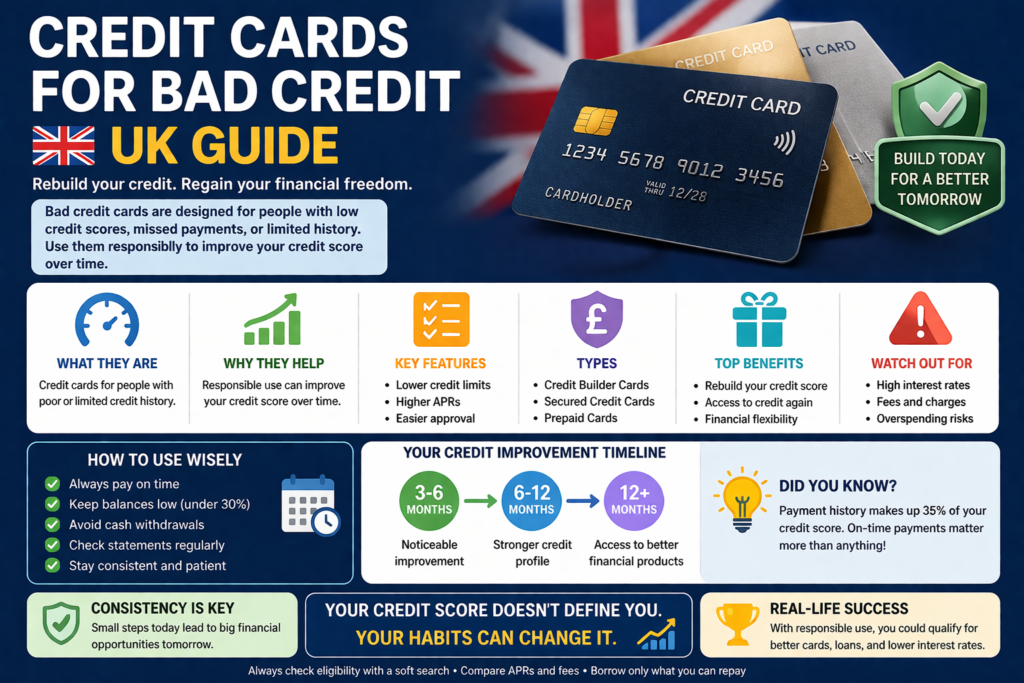
In today’s fast-paced financial world, having access to credit is more than just convenience—it’s a necessity. Whether you’re booking travel, shopping online, or handling emergencies, credit cards play a vital role. But what happens if your credit score isn’t ideal? Does that mean you’re locked out of financial opportunities?
Absolutely not.
If you have a poor or limited credit history, credit cards for bad credit in the UK are specifically designed to help you get back on track. These cards are not just about spending—they are powerful tools for rebuilding your credit profile and restoring your financial confidence.
Let’s dive deep into everything you need to know.
What Are Credit Cards for Bad Credit?
Credit cards for bad credit are tailored for individuals who have:
- Low credit scores
- Missed payments in the past
- Defaults or CCJs
- Limited or no credit history
Unlike standard credit cards, these come with:
- Lower credit limits
- Higher interest rates (APR)
- Easier approval criteria
But don’t let that discourage you. These cards are stepping stones—not final destinations.
Why Your Credit Score Matters
Your credit score is essentially your financial reputation. Lenders use it to decide:
- Whether to approve your application
- How much credit to offer
- What interest rate to charge
A low score can make it difficult to:
- Get loans
- Rent property
- Secure mobile contracts
That’s why improving it is so important—and credit cards designed for bad credit can help you do exactly that.
How These Credit Cards Help You Rebuild Credit
Using a bad credit credit card responsibly can gradually improve your credit score. Here’s how:
1. Payment History Builds Trust
Paying your bills on time shows lenders you’re reliable.
2. Credit Utilization Improves Score
Using only a small portion of your credit limit (ideally under 30%) positively impacts your score.
3. Regular Activity Signals Stability
Consistent, responsible usage demonstrates financial discipline.
Over time, these habits can significantly boost your credit rating.
Key Features of Bad Credit Credit Cards in the UK
Before applying, it’s important to understand what to expect.
✔ Lower Credit Limits
Typically between £200 and £1,500.
✔ Higher APR
Interest rates can be higher due to the perceived risk.
✔ Eligibility Checker Tools
Many providers offer soft checks that don’t affect your credit score.
✔ Credit Building Focus
Designed to help you improve your financial standing.
Types of Credit Cards for Bad Credit
1. Credit Builder Cards
The most common type. Ideal for improving your score over time.
2. Secured Credit Cards
Require a deposit as collateral. Lower risk for lenders.
3. Prepaid Cards (Limited Impact)
Not true credit cards, but can help with budgeting (not credit building).
Top Benefits of Using These Cards
🔹 Access to Credit Again
Even with a poor history, you can re-enter the credit system.
🔹 Improve Your Credit Score
Consistent usage leads to gradual improvement.
🔹 Emergency Backup
Provides a financial cushion when needed.
🔹 Financial Discipline
Encourages better spending and repayment habits.
Things to Watch Out For
While these cards are helpful, they require careful handling.
⚠ High Interest Rates
Always aim to pay your balance in full each month.
⚠ Fees
Some cards may charge annual or late payment fees.
⚠ Temptation to Overspend
Stick to a strict budget.
Tips to Use Your Credit Card Wisely
If your goal is to rebuild credit, strategy matters.
✅ Always Pay On Time
Set up direct debits to avoid missing payments.
✅ Keep Usage Low
Don’t max out your card.
✅ Check Your Statements
Monitor for errors or unusual transactions.
✅ Avoid Cash Withdrawals
They often come with high fees and interest.
How to Choose the Right Card
With so many options available in the UK, choosing the right one can feel overwhelming. Here’s what to consider:
🔍 Eligibility Criteria
Use soft-check tools before applying.
💳 Credit Limit
Start small and build gradually.
📊 APR Rates
Compare interest rates across providers.
💡 Fees and Charges
Look beyond just interest rates.
Common Myths About Bad Credit Credit Cards
Myth 1: “They’re Not Worth It”
Reality: They’re one of the best tools for rebuilding credit.
Myth 2: “They’ll Damage My Score Further”
Reality: Only if misused. Responsible use improves your score.
Myth 3: “Approval Is Guaranteed”
Reality: While easier, approval still depends on your profile.
How Long Does It Take to Improve Your Credit Score?
There’s no instant fix—but progress is absolutely possible.
- 3–6 months: Noticeable improvement with consistent payments
- 6–12 months: Stronger credit profile
- 12+ months: Access to better financial products
Patience and discipline are key.
Alternatives to Consider
If you’re not ready for a credit card yet, here are other options:
🔹 Credit Builder Loans
Small loans designed to improve your score.
🔹 Become an Authorized User
Use someone else’s credit account responsibly.
🔹 Budgeting Tools
Apps that help manage spending habits.
The Psychological Side of Credit Repair
Rebuilding credit isn’t just financial—it’s emotional too.
- It requires discipline
- It demands patience
- It builds confidence
Every on-time payment is a step toward financial independence.
Real-Life Example
Imagine Sarah, who had missed payments in the past. Her credit score dropped, making it difficult to get approved for loans.
She applied for a credit builder card with a £300 limit.
- She spent only £50–£80 per month
- Paid the balance in full
- Never missed a due date
Within 8 months, her credit score improved significantly. She later qualified for a mainstream credit card with better terms.
That’s the power of consistency.
The Future of Your Financial Journey
Using a credit card for bad credit is not the end—it’s the beginning.
It opens doors to:
- Better financial products
- Lower interest rates
- Greater financial freedom
Think of it as rebuilding your financial reputation, one step at a time.
Final Thoughts
Credit cards for bad credit in the UK are more than just financial tools—they are opportunities. Opportunities to rebuild, to learn, and to grow.
Yes, they come with limitations. Yes, they require responsibility. But if used wisely, they can transform your financial future.
Remember:
- Start small
- Stay consistent
- Be disciplined
Your credit score doesn’t define you—it reflects your habits. And habits can always change.