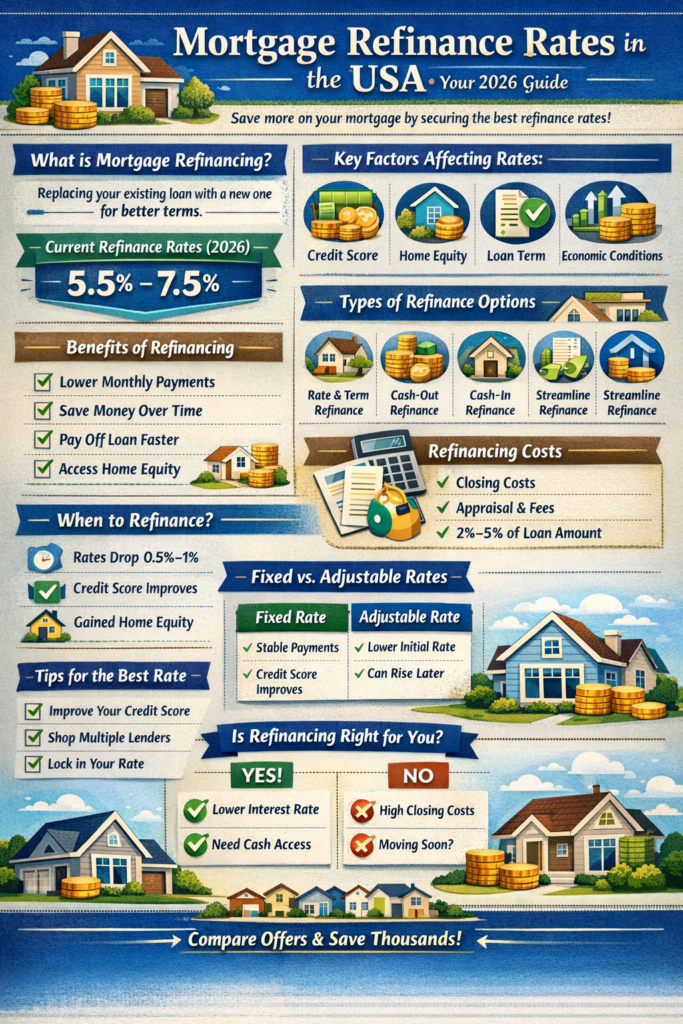
Refinancing your mortgage can be one of the smartest financial moves you make—especially when mortgage refinance rates in the USA are favorable. Whether you want to lower your monthly payments, shorten your loan term, or tap into your home’s equity, understanding refinance rates is essential to making the right decision.
This comprehensive guide will walk you through everything you need to know about refinance rates, how they work, current trends, and how to secure the best deal in 2026.
💡 What is Mortgage Refinancing?
Mortgage refinancing means replacing your existing home loan with a new one, usually with better terms. Homeowners refinance to:
- Lower their interest rate
- Reduce monthly payments
- Switch loan types (fixed ↔ adjustable)
- Access cash through home equity
📊 What Are Mortgage Refinance Rates?
Mortgage refinance rates are the interest rates lenders charge when you replace your current mortgage. These rates determine how much interest you’ll pay over time.
In 2026, refinance rates in the USA typically range between:
- 5.5% to 7.5% (depending on market conditions and borrower profile)
However, your exact rate depends on several personal and economic factors.
📈 Factors That Affect Refinance Rates
Understanding what influences your rate can help you secure a better deal:
1. Credit Score
Higher credit scores (700+) qualify for lower interest rates.
2. Loan-to-Value Ratio (LTV)
The more equity you have in your home, the lower your risk—and your rate.
3. Loan Term
- Short-term loans (15 years): lower rates
- Long-term loans (30 years): higher rates
4. Economic Conditions
Inflation, Federal Reserve policies, and housing market trends all impact rates.
5. Property Type
Primary homes often get better rates than investment properties.
🔄 Types of Mortgage Refinance Options
🏠 Rate-and-Term Refinance
The most common type—used to lower interest rate or change loan duration.
💵 Cash-Out Refinance
Borrow more than your current balance and receive the difference in cash.
🔁 Cash-In Refinance
Pay extra upfront to reduce your loan balance and secure better rates.
📉 Streamline Refinance
Available for government-backed loans (FHA, VA), offering simplified approval.
💰 Benefits of Refinancing
✔ Lower Monthly Payments
Reducing your interest rate can significantly cut your monthly expenses.
✔ Save Money Over Time
Even a 1% rate drop can save thousands over the life of the loan.
✔ Pay Off Loan Faster
Switching to a shorter term builds equity quickly.
✔ Access Home Equity
Use funds for home improvements, education, or debt consolidation.
⚠️ Costs of Refinancing
Refinancing isn’t free—you need to consider closing costs:
- Application fees
- Appraisal fees
- Title insurance
- Origination fees
Typical costs range from 2% to 5% of the loan amount.
💡 Tip:
Calculate your break-even point—how long it takes for savings to cover refinancing costs.
📉 When is the Best Time to Refinance?
Timing is everything in refinancing.
Ideal Situations:
- Interest rates drop by at least 0.5%–1%
- Your credit score improves
- You gain significant home equity
- You want to switch loan types
📝 How to Get the Best Refinance Rate
✔ Improve Your Credit Score
Pay off debts and avoid late payments.
✔ Shop Around
Compare offers from multiple lenders.
✔ Lock Your Rate
Secure your rate to avoid market fluctuations.
✔ Choose the Right Loan Term
Balance between affordable payments and long-term savings.
✔ Reduce Debt-to-Income Ratio
Lower debt improves your financial profile.
🏦 Fixed vs Adjustable Refinance Rates
🔒 Fixed-Rate Mortgage
- Same interest rate for entire term
- Stable and predictable payments
🔄 Adjustable-Rate Mortgage (ARM)
- Lower initial rates
- Rates can increase over time
📊 Example of Refinance Savings
Let’s say:
- Current loan: $300,000 at 7%
- New refinance: 5.8%
You could save hundreds per month and tens of thousands over the loan term.
🔮 Mortgage Refinance Trends in 2026
The refinance market is evolving rapidly:
- Increased use of AI for faster approvals
- More digital and paperless processes
- Competitive rates from online lenders
- Rising demand due to fluctuating interest rates
Experts predict that refinance activity will grow as borrowers seek to lock in better rates amid economic changes.
⚖️ Should You Refinance?
Refinancing is a smart move if:
✅ You can lower your interest rate
✅ You plan to stay in your home long enough to recover costs
✅ You want to reduce monthly payments
✅ You need access to cash
Avoid refinancing if:
❌ Closing costs outweigh savings
❌ You plan to move soon
❌ Your credit score has dropped
🔒 Tips to Avoid Common Mistakes
- Don’t focus only on monthly savings—consider total cost
- Avoid extending your loan term unnecessarily
- Read all terms carefully
- Watch out for hidden fees
🎯 Final Thoughts
Mortgage refinance rates in the USA play a crucial role in shaping your financial future as a homeowner. With the right strategy, refinancing can help you save money, reduce stress, and achieve your long-term financial goals.
However, it’s important to evaluate your personal situation, compare lenders, and understand all costs before making a decision. In 2026, with advanced technology and competitive markets, homeowners have more opportunities than ever to secure better refinance deals.