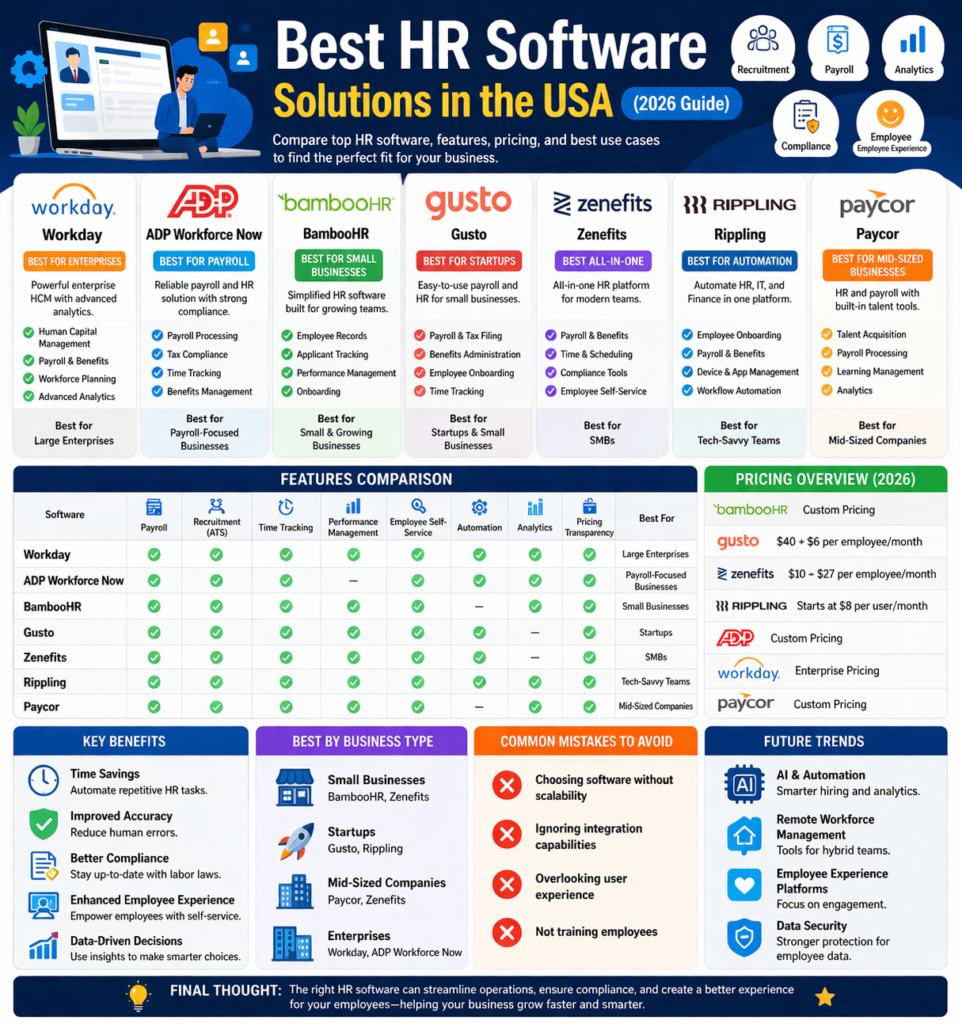
In today’s modern workplace, managing human resources efficiently is more important than ever. From hiring top talent to handling payroll, compliance, and employee engagement, HR departments face increasing complexity. This is where HR software solutions come in—transforming traditional HR processes into streamlined, automated systems.
Across the United States, businesses of all sizes are adopting advanced HR software to improve productivity, enhance employee experiences, and stay compliant with labor laws. Whether you’re a startup or a large enterprise, choosing the right HR software can significantly impact your organization’s success.
In this comprehensive guide, we explore the best HR software solutions in the USA, their features, benefits, pricing, and how to choose the right one.
Why HR Software Is Essential
HR software simplifies and automates core human resource functions such as:
- Recruitment and onboarding
- Payroll processing
- Time and attendance tracking
- Employee performance management
- Compliance and reporting
Manual HR processes are time-consuming and prone to errors. HR software eliminates these inefficiencies and allows HR teams to focus on strategic tasks.
Top HR Software Solutions in the USA
1. Workday– Best for Enterprises
Workday is one of the most powerful HR platforms used by large organizations.
Key Features:
- Human capital management (HCM)
- Payroll and benefits administration
- Workforce planning
- Advanced analytics
Pros:
- Highly scalable
- Comprehensive features
- Strong reporting tools
Cons:
- Expensive
- Complex implementation
Best For:
Large enterprises with global operations.
2. ADP Workforce Now– Best for Payroll
ADP Workforce Now is a trusted name in payroll and HR solutions.
Key Features:
- Payroll processing
- Tax compliance
- Time tracking
- Benefits management
Pros:
- Reliable payroll system
- Strong compliance tools
- Trusted brand
Cons:
- Interface can feel outdated
- Pricing not transparent
Best For:
Businesses that need strong payroll capabilities.
3. BambooHR– Best for Small Businesses
BambooHR is designed for small to medium-sized businesses.
Key Features:
- Employee records management
- Applicant tracking system (ATS)
- Performance management
- Onboarding tools
Pros:
- User-friendly interface
- Affordable
- Great customer support
Cons:
- Limited payroll features
- Not ideal for large enterprises
Best For:
Small and growing businesses.
4. Gusto – Best for Startups
Gusto is a popular choice for startups and small businesses.
Key Features:
- Payroll and tax filing
- Benefits administration
- Employee onboarding
- Time tracking
Pros:
- Easy to use
- Transparent pricing
- Great for startups
Cons:
- Limited advanced HR features
- Not ideal for large companies
Best For:
Startups and small businesses.
5. – Best All-in-One HR Tool
Zenefits offers a complete HR solution in one platform.
Key Features:
- Payroll and benefits
- Time and scheduling
- Compliance tools
- Employee self-service
Pros:
- All-in-one solution
- Easy integration
- Good automation
Cons:
- Limited customization
- Customer support issues
Best For:
Small to medium-sized businesses.
6. – Best for Automation
Rippling combines HR, IT, and finance into one system.
Key Features:
- Employee onboarding automation
- Payroll and benefits
- Device and app management
- Workflow automation
Pros:
- Highly automated
- Modern interface
- Scalable
Cons:
- Pricing can increase quickly
- Setup complexity
Best For:
Tech-savvy businesses and growing teams.
7. – Best for Mid-Sized Businesses
Paycor is ideal for mid-sized organizations.
Key Features:
- Talent acquisition
- Payroll processing
- Learning management
- Analytics
Pros:
- Strong analytics
- Scalable features
- Good support
Cons:
- Expensive for small businesses
- Interface can be complex
Best For:
Mid-sized companies.
Key Features to Look for in HR Software
1. Payroll & Compliance
Ensure the software handles payroll accurately and complies with U.S. laws.
2. Recruitment Tools
Applicant tracking systems help streamline hiring.
3. Employee Self-Service
Employees can manage their own data, reducing HR workload.
4. Automation
Automate repetitive tasks like onboarding and payroll.
5. Analytics & Reporting
Gain insights into workforce performance and trends.
Pricing Overview (2026)
Typical pricing ranges:
- BambooHR: Custom pricing
- Gusto: $40 + $6 per employee/month
- Zenefits: $10–$27 per employee/month
- Rippling: Starts around $8 per user/month
- ADP: Custom pricing
- Workday: Enterprise pricing
Costs depend on company size, features, and integrations.
Best HR Software by Business Type
For Small Businesses:
- BambooHR
- Gusto
- Zenefits
For Startups:
- Gusto
- Rippling
For Enterprises:
- Workday
- ADP Workforce Now
Benefits of HR Software Solutions
1. Time Savings
Automation reduces manual work.
2. Improved Accuracy
Minimizes human errors in payroll and data entry.
3. Better Compliance
Helps businesses stay compliant with labor laws.
4. Enhanced Employee Experience
Self-service tools improve satisfaction.
5. Data-Driven Decisions
Analytics provide valuable insights.
Common Mistakes to Avoid
- Choosing software without scalability
- Ignoring integration capabilities
- Overlooking user experience
- Not training employees
Future Trends in HR Software
1. AI & Automation
AI will handle recruitment, onboarding, and analytics.
2. Remote Workforce Management
Tools will focus on hybrid and remote teams.
3. Employee Experience Platforms
Focus on engagement and satisfaction.
4. Data Security
Enhanced protection of employee data.
Final Thoughts
Choosing the best HR software solution in the USA depends on your company’s size, needs, and budget.
- Use workday for enterprise-level solutions
- Choose gusto for startups
- Pick BambooHR for small businesses
- Go with Rippling for automation
The right HR software can streamline operations, improve employee satisfaction, and drive business growth.