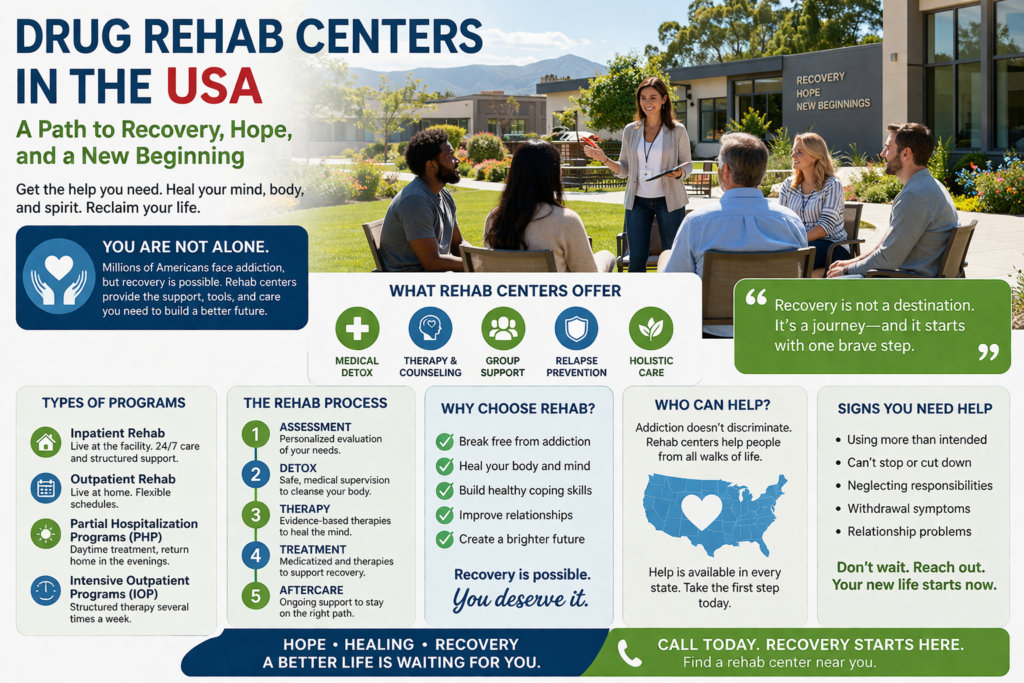
Addiction is not a failure of character—it is a complex condition that affects the brain, body, and behavior. Across the United States, millions of individuals and families are impacted by substance use disorders every year. Fortunately, drug rehab centers offer a lifeline—providing structured care, medical support, and emotional healing to help individuals reclaim their lives.
If you or a loved one is struggling with addiction, understanding how drug rehabilitation centers work in the USA can be the first step toward lasting recovery. This comprehensive guide explores everything you need to know—from types of rehab programs to treatment methods, costs, and how to choose the right center.
What Is a Drug Rehab Center?
A drug rehabilitation (rehab) center is a specialized facility designed to help individuals overcome addiction to substances such as alcohol, opioids, cocaine, methamphetamine, and prescription drugs. These centers provide a safe, supportive environment where patients can detox, receive therapy, and develop coping strategies for long-term sobriety.
Rehab is not just about quitting drugs—it’s about healing physically, mentally, and emotionally.
Why Drug Rehab Is Important
Addiction can affect every aspect of life—health, relationships, career, and mental well-being. Without professional help, overcoming addiction can be extremely difficult due to withdrawal symptoms, cravings, and psychological dependence.
Drug rehab centers offer:
- Medical supervision during detox
- Structured daily routines
- Therapeutic support
- Relapse prevention strategies
- Long-term recovery planning
These elements significantly increase the chances of successful recovery.
Types of Drug Rehab Centers in the USA
The United States offers a wide variety of rehab programs tailored to individual needs. Choosing the right type depends on the severity of addiction, personal circumstances, and treatment goals.
1. Inpatient Rehab (Residential Treatment)
Inpatient rehab requires patients to live at the facility for a specific period—typically 30, 60, or 90 days.
Key Features:
- 24/7 medical and emotional support
- Structured environment
- Intensive therapy sessions
- No outside distractions
Best For: Severe addiction, relapse history, or unsafe home environments.
2. Outpatient Rehab Programs
Outpatient rehab allows individuals to live at home while attending scheduled treatment sessions.
Key Features:
- Flexible schedules
- Lower cost than inpatient programs
- Ability to continue work or education
Best For: Mild to moderate addiction or those with strong support systems.
3. Partial Hospitalization Programs (PHP)
PHP is a middle-ground option between inpatient and outpatient care.
Key Features:
- Daytime treatment (5–7 days a week)
- Medical supervision
- Return home in the evening
4. Intensive Outpatient Programs (IOP)
IOP offers structured therapy sessions multiple times a week without full hospitalization.
Best For: Individuals transitioning from inpatient rehab or those needing structured support without full-time care.
The Drug Rehab Process: Step-by-Step
Understanding what happens in rehab can help reduce fear and uncertainty.
1. Assessment and Evaluation
Each patient undergoes a comprehensive assessment to determine:
- Substance use history
- Physical and mental health
- Treatment needs
This helps create a personalized treatment plan.
2. Detoxification (Detox)
Detox is the process of removing drugs or alcohol from the body.
Important Note: Detox can be dangerous without medical supervision, especially for substances like alcohol or opioids.
Rehab centers provide:
- Medication-assisted treatment (MAT)
- Monitoring of vital signs
- Support for withdrawal symptoms
3. Therapy and Counseling
Therapy is the core of addiction treatment. It addresses the underlying causes of addiction and helps patients develop healthier behaviors.
Common therapies include:
- Cognitive Behavioral Therapy (CBT)
- Dialectical Behavior Therapy (DBT)
- Individual counseling
- Group therapy
- Family therapy
4. Medication-Assisted Treatment (MAT)
MAT combines medications with counseling to treat substance use disorders.
Examples include:
- Methadone
- Buprenorphine
- Naltrexone
These medications help reduce cravings and prevent relapse.
5. Aftercare and Relapse Prevention
Recovery doesn’t end after rehab. Aftercare programs help individuals maintain sobriety.
These may include:
- Support groups (like 12-step programs)
- Ongoing therapy
- Sober living homes
- Lifestyle coaching
Luxury vs. Standard Rehab Centers
The USA offers both standard and luxury rehab facilities.
Standard Rehab Centers
- Affordable or insurance-covered
- Basic amenities
- High-quality clinical care
Luxury Rehab Centers
- Resort-like environments
- Private rooms
- Gourmet meals
- Holistic therapies (yoga, meditation, spa treatments)
While luxury centers provide comfort, the effectiveness of treatment depends more on the program than the setting.
Cost of Drug Rehab in the USA
The cost of rehab varies widely depending on the type of program and facility.
Estimated Costs:
- Inpatient rehab: $6,000 – $30,000 per month
- Outpatient rehab: $1,000 – $10,000 total
- Detox programs: $300 – $1,500 per day
Insurance Coverage
Many rehab centers accept insurance, including:
- Private health insurance
- Medicaid
- Medicare
The Affordable Care Act requires many insurance plans to cover addiction treatment.
How to Choose the Right Drug Rehab Center
Selecting the right rehab center is a critical decision. Here are key factors to consider:
1. Accreditation and Licensing
Ensure the facility is certified and meets national standards.
2. Treatment Approaches
Look for evidence-based therapies like CBT and MAT.
3. Staff Qualifications
Check for licensed therapists, doctors, and addiction specialists.
4. Success Rates
While no program guarantees success, transparency is important.
5. Location
Some prefer nearby centers; others choose out-of-state facilities for a fresh start.
Holistic and Alternative Therapies
Many rehab centers in the USA incorporate holistic treatments to support overall well-being.
These include:
- Yoga and meditation
- Art and music therapy
- Equine therapy
- Nutrition counseling
- Mindfulness practices
These therapies complement traditional treatment methods.
Dual Diagnosis Treatment
Many individuals struggling with addiction also suffer from mental health disorders such as:
- Depression
- Anxiety
- PTSD
Dual diagnosis programs treat both addiction and mental health conditions simultaneously, improving recovery outcomes.
Support for Families
Addiction affects not just individuals but entire families. Many rehab centers offer family programs that include:
- Counseling sessions
- Education about addiction
- Communication skills training
Family involvement can play a crucial role in recovery.
Signs You or a Loved One Needs Rehab
Recognizing the need for help is the first step toward recovery.
Common signs include:
- Loss of control over substance use
- Neglecting responsibilities
- Withdrawal symptoms
- Failed attempts to quit
- Relationship problems
If these signs are present, seeking professional help is essential.
The Role of Support Groups
Support groups are a vital part of long-term recovery.
Popular programs include:
- Alcoholics Anonymous (AA)
- Narcotics Anonymous (NA)
These groups provide:
- Peer support
- Accountability
- A sense of community
Success Stories: Recovery Is Possible
Thousands of people recover from addiction every year through rehab programs. With the right support, commitment, and treatment plan, long-term sobriety is achievable.
Recovery is not a straight path—it involves challenges, setbacks, and growth. But every step forward is a victory.
Breaking the Stigma Around Addiction
One of the biggest barriers to treatment is stigma. Addiction is often misunderstood as a moral failing rather than a medical condition.
It’s important to remember:
- Addiction can affect anyone
- Seeking help is a sign of strength
- Recovery is possible
By raising awareness and promoting compassion, society can encourage more individuals to seek help.
Final Thoughts: A New Chapter Begins
Choosing to enter a drug rehab center is a courageous decision—one that can transform lives. The USA offers a wide range of high-quality rehab facilities designed to support individuals at every stage of recovery.
Whether it’s inpatient care, outpatient support, or holistic therapy, there is a path for everyone. The journey may be challenging, but the reward—a healthier, happier, and drug-free life—is worth it.
If you or someone you love is struggling with addiction, don’t wait. Help is available, and recovery is within reach.
Remember: The first step is always the hardest—but it’s also the most powerful.