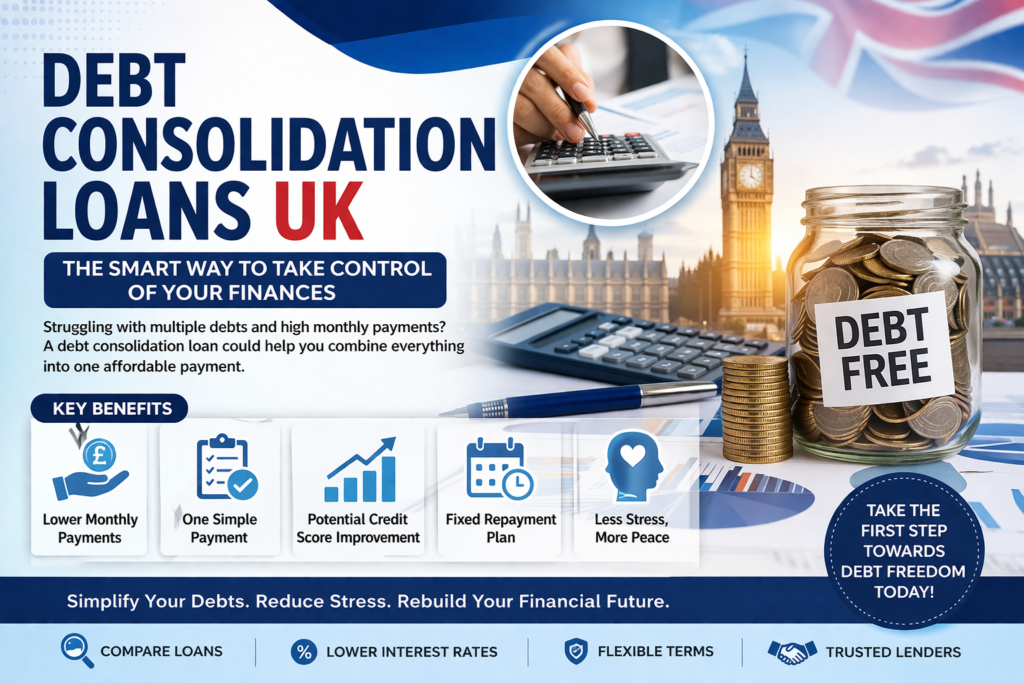
Debt Consolidation Loans UK: The Smart Way to Take Control of Your Finances
Managing multiple debts can feel overwhelming—especially when you’re juggling credit cards, personal loans, overdrafts, and other financial commitments. If you’re struggling to keep track of payments or facing high interest rates, a debt consolidation loan in the UK might be the financial solution you’ve been searching for.
In this comprehensive guide, we’ll explore everything you need to know—from how debt consolidation works to its benefits, risks, eligibility, and tips for choosing the best option.
📌 What Is a Debt Consolidation Loan?
A debt consolidation loan is a financial product that allows you to combine multiple debts into a single loan. Instead of making several payments to different lenders each month, you make one fixed payment to a single lender.
This loan is typically used to pay off:
- Credit card balances
- Store cards
- Payday loans
- Personal loans
- Overdrafts
💡 How Does Debt Consolidation Work?
The process is simple and effective:
- You apply for a loan large enough to cover your existing debts
- Once approved, you use the funds to pay off those debts
- You’re left with one monthly repayment instead of several
This simplifies your finances and can often reduce your overall interest rate.
✅ Key Benefits of Debt Consolidation Loans UK
1. Lower Monthly Payments
Many consolidation loans offer lower interest rates than credit cards or payday loans, reducing your monthly financial burden.
2. Simplified Finances
Instead of managing multiple due dates, you only need to remember one payment.
3. Improved Credit Score (Potentially)
By paying off existing debts and making consistent payments, your credit score may improve over time.
4. Fixed Repayment Plan
Most loans come with fixed terms, helping you plan your finances more effectively.
5. Reduced Stress
Financial stress can impact your health. Consolidation can bring peace of mind.
⚠️ Potential Drawbacks to Consider
While debt consolidation can be helpful, it’s not without risks:
- Longer repayment periods may mean paying more interest overall
- Fees and charges could apply
- Risk of more debt if spending habits don’t change
- Secured loans may put your home at risk
🔍 Types of Debt Consolidation Loans in the UK
🏦 1. Unsecured Personal Loans
- No collateral required
- Based on your creditworthiness
- Ideal for smaller debts
🏠 2. Secured Loans
- Backed by your home or property
- Lower interest rates
- Higher risk if you default
💳 3. Balance Transfer Credit Cards
- Transfer multiple debts onto one card
- Often offer 0% interest for a limited time
📊 4. Debt Management Plans (Alternative)
Not a loan, but a structured plan to repay debts through an agency.
📈 Who Should Consider a Debt Consolidation Loan?
This option may be suitable if you:
- Have multiple high-interest debts
- Are struggling to keep up with payments
- Want a single monthly payment
- Have a fair to good credit score
❌ When Debt Consolidation May NOT Be Right
Avoid consolidation if:
- You continue to accumulate new debt
- The loan has higher interest than existing debts
- You cannot meet the repayment terms
📊 Eligibility Criteria in the UK
To qualify for a debt consolidation loan, lenders typically consider:
- Credit score
- Income and employment status
- Existing debts
- UK residency
📄 Documents Required
You may need:
- Proof of identity (passport/driving licence)
- Proof of address
- Bank statements
- Payslips
🏆 How to Choose the Best Debt Consolidation Loan UK
🔎 1. Compare Interest Rates
Always look for the lowest APR available to you.
📝 2. Check Fees
Watch out for:
- Arrangement fees
- Early repayment charges
📆 3. Consider Loan Terms
Shorter terms = less interest overall
Longer terms = lower monthly payments
⭐ 4. Read Reviews
Choose reputable lenders with strong customer feedback.
💻 Where to Apply for Debt Consolidation Loans UK
You can apply through:
- Banks
- Credit unions
- Online lenders
- Comparison websites
Popular platforms include well-known UK financial comparison sites and traditional banks.
📉 Impact on Your Credit Score
Initially, applying for a loan may cause a slight dip in your credit score. However:
- Paying off debts improves your credit utilisation
- On-time payments boost your score over time
🧠 Smart Tips for Managing Debt After Consolidation
- ✔️ Create a monthly budget
- ✔️ Avoid unnecessary spending
- ✔️ Build an emergency fund
- ✔️ Don’t use paid-off credit cards again
- ✔️ Automate payments
🔄 Alternatives to Debt Consolidation Loans
If consolidation isn’t right for you, consider:
- Debt management plans
- Individual Voluntary Arrangements (IVA)
- Bankruptcy (last resort)
- Negotiating directly with creditors
🌟 Real-Life Example
Imagine you have:
- £3,000 credit card debt (20% interest)
- £2,000 personal loan (15% interest)
- £1,000 overdraft
By consolidating into a single £6,000 loan at 10% interest, you could:
- Reduce monthly payments
- Save on interest
- Simplify your finances
📊 Pros vs Cons Summary
✔️ Pros
- Easier financial management
- Potential lower interest rates
- Fixed repayment structure
❌ Cons
- Possible fees
- Risk of longer repayment
- Requires discipline
🔮 Future of Debt Consolidation in the UK
With the rise of fintech and digital lending platforms, debt consolidation is becoming:
- Faster (instant approvals)
- More accessible
- More competitive
Borrowers now have more choices than ever before.
🎯 Final Thoughts
A debt consolidation loan in the UK can be a powerful tool for regaining control of your finances—but only if used wisely. It’s not a magic solution, but with discipline and smart financial planning, it can help you move towards a debt-free future.
Before applying, always:
- Compare multiple lenders
- Understand the terms
- Assess your financial habits
🚀 Ready to Take Control?
If you’re feeling overwhelmed by multiple debts, now might be the perfect time to explore debt consolidation options. With the right approach, you can simplify your finances, reduce stress, and build a stronger financial future.