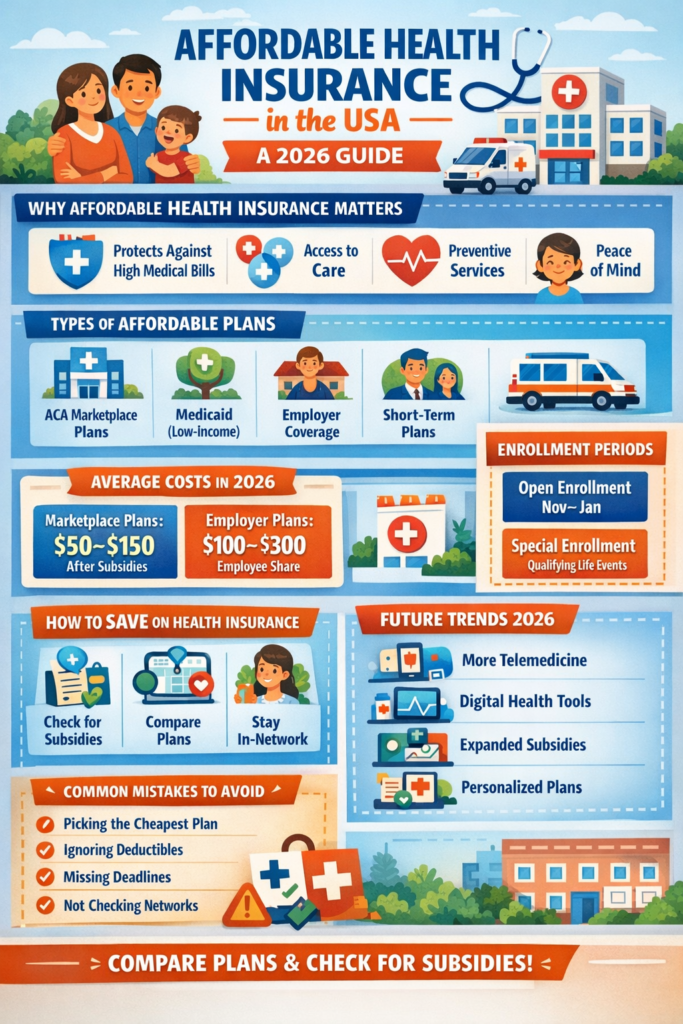
Health insurance in the United States is essential—but for many people, it can feel confusing and expensive. The good news is that affordable health insurance options do exist, and with the right knowledge, you can find a plan that protects both your health and your budget.
This guide will help you understand how to find affordable coverage, what options are available, and how to choose the best plan for your needs.
🩺 What Is Health Insurance?
Health insurance is a contract between you and an insurance provider. You pay a monthly premium, and in return, the insurer helps cover your medical expenses.
These typically include:
- Doctor visits
- Hospital stays
- Prescription medications
- Preventive care (checkups, vaccines)
- Emergency services
Without insurance, healthcare costs in the U.S. can be extremely high, making coverage a financial safety net.
💡 Why Affordable Health Insurance Matters
Affordable health insurance is important because it:
- Protects you from high medical bills
- Ensures access to quality healthcare
- Encourages preventive care
- Provides peace of mind
Many Americans avoid treatment due to cost—but having an affordable plan helps you seek care when needed without financial stress.
📊 Types of Affordable Health Insurance Plans
Understanding your options is the first step to saving money.
1. Marketplace Plans (ACA Plans)
These plans are available through the Health Insurance Marketplace under the Affordable Care Act (ACA).
Key Benefits:
- Subsidies based on income
- Essential health benefits included
- No denial for pre-existing conditions
👉 Best for: Individuals and families with moderate or low income
2. Medicaid (Low-Income Coverage)
Medicaid is a government program that provides free or very low-cost coverage.
Key Benefits:
- Minimal or no premiums
- Comprehensive coverage
- Available based on income eligibility
👉 Best for: Low-income individuals, families, and some seniors
3. Employer-Sponsored Insurance
Many employers offer health insurance as part of benefits.
Key Benefits:
- Employer pays part of the premium
- Lower overall cost
- Convenient enrollment
👉 Best for: Full-time employees
4. Short-Term Health Insurance
These are temporary plans designed to cover gaps.
Key Benefits:
- Lower monthly premiums
- Quick approval
Drawbacks:
- Limited coverage
- May not include pre-existing conditions
👉 Best for: Temporary coverage needs
5. Catastrophic Health Plans
These plans have low premiums but high deductibles.
Key Benefits:
- Protection against major emergencies
- Lower monthly cost
👉 Best for: Young, healthy individuals
💰 How Much Does Affordable Health Insurance Cost?
The cost of health insurance varies widely depending on several factors:
📌 Key Factors Affecting Cost:
- Age
- Location
- Income
- Plan type
- Coverage level
💵 Average Monthly Costs (2026):
- Individual (Marketplace): $200–$500
- After subsidies: $50–$150
- Employer plans: $100–$300 (employee share)
👉 With subsidies, many people pay significantly less than expected.
📉 How to Get Affordable Health Insurance
Finding a low-cost plan requires smart comparison and planning.
1. Check If You Qualify for Subsidies
Government subsidies can reduce your premium based on income.
👉 Many people don’t realize they qualify—always check first.
2. Compare Multiple Plans
Never settle for the first option.
Look at:
- Premiums
- Deductibles
- Out-of-pocket maximum
- Network coverage
👉 Comparing plans can save you hundreds of dollars per year.
3. Choose the Right Coverage Level
Health plans come in categories:
- Bronze (lowest premium, highest deductible)
- Silver (balanced option)
- Gold (higher premium, lower costs)
👉 If you rarely visit doctors, a Bronze plan may be the most affordable.
4. Use Preventive Services
Most plans cover preventive care for free.
This includes:
- Annual checkups
- Vaccinations
- Screenings
👉 Preventive care reduces long-term costs.
5. Stay In-Network
Doctors and hospitals in your plan’s network cost less.
👉 Going out-of-network can lead to high unexpected bills.
⚠️ Common Mistakes to Avoid
Avoid these errors when choosing a plan:
❌ Choosing the cheapest plan without checking coverage
❌ Ignoring deductibles and out-of-pocket costs
❌ Not checking doctor networks
❌ Missing enrollment deadlines
❌ Underestimating healthcare needs
👉 The cheapest plan isn’t always the most affordable in the long run.
👨👩👧 Who Needs Health Insurance the Most?
Health insurance is important for everyone, but especially for:
- Families with children
- Individuals with medical conditions
- Seniors nearing retirement
- Self-employed individuals
- People without employer coverage
👉 Even healthy individuals benefit from protection against unexpected emergencies.
💡 Tips to Save Money on Health Insurance
Here are practical ways to reduce your costs:
✔️ Apply Early
Enrollment periods are limited—don’t miss deadlines.
✔️ Maintain a Healthy Lifestyle
Non-smokers and healthier individuals often get lower rates.
✔️ Consider a Higher Deductible
Lower monthly premiums, but higher upfront costs.
✔️ Use Health Savings Accounts (HSAs)
Save money tax-free for medical expenses.
✔️ Bundle Insurance Plans
Some insurers offer discounts for bundling policies.
📅 When Can You Enroll?
You can enroll in health insurance during:
Open Enrollment Period
Usually November to January each year.
Special Enrollment Period
Triggered by life events such as:
- Marriage
- Job loss
- Birth of a child
👉 Missing enrollment may leave you uninsured for months.
🚀 Future Trends in Affordable Health Insurance (2026)
Health insurance is evolving with new trends:
- Increased use of telemedicine
- More digital health tools
- Expanded subsidy programs
- Personalized insurance plans
👉 These trends aim to make healthcare more accessible and affordable.
🏁 Final Thoughts
Affordable health insurance in the USA is achievable—you just need to understand your options and choose wisely.
👉 The best approach is simple:
- Evaluate your healthcare needs
- Compare multiple plans
- Take advantage of subsidies
- Choose a balance between premium and coverage
For most people, Marketplace (ACA) plans with subsidies offer the best combination of affordability and coverage.
In the end, health insurance isn’t just a monthly expense—it’s an investment in your well-being and financial security.