When we seek medical care, we place immense trust in doctors, nurses, and healthcare professionals. We expect safe treatment, accurate diagnoses, and compassionate care. But what happens when something goes wrong—not because of illness, but due to avoidable mistakes?
Medical negligence can have life-changing consequences. From misdiagnosis to surgical errors, these incidents can lead to physical pain, emotional distress, financial loss, and even long-term disability. In such situations, a medical negligence solicitor in the UK becomes your strongest ally—helping you seek justice, accountability, and compensation.
This complete guide will walk you through everything you need to know about medical negligence solicitors in the UK, how they work, and how they can help you rebuild your life after a medical mistake.
What is Medical Negligence?
Medical negligence occurs when a healthcare professional fails to provide the standard of care expected, resulting in harm to a patient.
Key Elements of Medical Negligence
To make a successful claim, you must prove:
- Duty of Care
The healthcare provider owed you a duty of care. - Breach of Duty
The provider failed to meet the required standard. - Causation
The breach directly caused harm or injury. - Damages
You suffered physical, emotional, or financial loss.
If all these elements are present, you may have a valid claim.
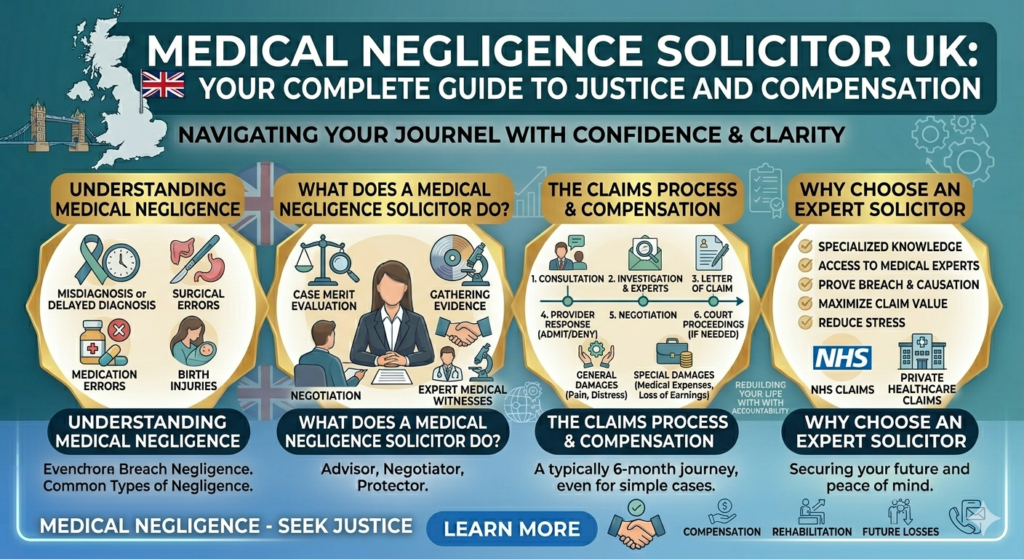
Common Types of Medical Negligence Cases
Medical negligence can occur in many forms.
Misdiagnosis or Delayed Diagnosis
- Incorrect diagnosis
- Failure to diagnose serious conditions (e.g., cancer)
- Delays leading to worsening health
Surgical Errors
- Wrong-site surgery
- Retained surgical instruments
- Nerve damage
Medication Errors
- Incorrect dosage
- Wrong medication
- Allergic reactions due to oversight
Birth Injuries
- Harm to mother or baby during childbirth
- Delayed C-section
- Oxygen deprivation
GP Negligence
- Failure to refer to specialists
- Incorrect treatment plans
Hospital Negligence
- Poor hygiene leading to infections
- Inadequate monitoring of patients
What Does a Medical Negligence Solicitor Do?
A medical negligence solicitor specializes in handling claims against healthcare providers.
1. Case Assessment
They evaluate whether your case has legal merit.
2. Gathering Evidence
This includes:
- Medical records
- Expert opinions
- Witness statements
3. Building Your Claim
They establish negligence and calculate damages.
4. Negotiation
Most claims are settled out of court. Solicitors negotiate with the opposing party.
5. Court Representation
If necessary, they represent you in court.
Why You Need a Medical Negligence Solicitor
Medical negligence cases are complex and require expert knowledge.
Access to Medical Experts
Solicitors work with specialists who can provide professional opinions.
Understanding Legal Standards
They know how to prove breach of duty and causation.
Maximizing Compensation
They ensure you receive fair compensation for all losses.
Reducing Stress
They handle legal complexities so you can focus on recovery.
The Claims Process Explained
Understanding the process can help you feel more confident.
Step 1: Initial Consultation
You discuss your case with a solicitor.
Step 2: Investigation
The solicitor gathers evidence and consults experts.
Step 3: Letter of Claim
A formal complaint is sent to the healthcare provider.
Step 4: Response
The provider responds, admitting or denying liability.
Step 5: Negotiation
Settlement discussions take place.
Step 6: Court Proceedings (if needed)
If no agreement is reached, the case goes to court.
Time Limits for Claims
In the UK, medical negligence claims must usually be made within:
- 3 years from the date of injury, or
- 3 years from when you became aware of the negligence
Exceptions apply for:
- Children (time limit starts at age 18)
- Individuals lacking mental capacity
Compensation: What Can You Claim?
Compensation aims to restore you to the position you would have been in without negligence.
General Damages
- Pain and suffering
- Emotional distress
Special Damages
- Medical expenses
- Loss of earnings
- Travel costs
- Care and support
Future Losses
- Ongoing treatment
- Rehabilitation
- Loss of future income
No Win, No Fee Agreements
Many solicitors offer Conditional Fee Agreements (CFA).
How It Works
- No upfront legal fees
- You only pay if you win
- A success fee is deducted from compensation
This makes legal support accessible to more people.
How to Choose the Right Medical Negligence Solicitor
Choosing the right solicitor is crucial.
Look for Specialization
Not all lawyers handle medical negligence. Choose a specialist.
Check Experience
Ask about similar cases they’ve handled.
Accreditation
Look for membership in:
- Law Society Clinical Negligence Panel
- Action against Medical Accidents (AvMA)
Client Reviews
Positive feedback indicates reliability.
Communication
Choose someone who explains things clearly.
NHS vs Private Healthcare Claims
You can make claims against both NHS and private providers.
NHS Claims
Handled by NHS Resolution.
Private Claims
Handled through insurers.
Your solicitor will guide you through the appropriate process.
Challenges in Medical Negligence Cases
These cases can be difficult.
Proving Causation
You must show that negligence directly caused harm.
Expert Evidence
Medical experts may disagree.
Lengthy Process
Cases can take months or years.
A skilled solicitor helps overcome these challenges.
Emotional Impact of Medical Negligence
The effects go beyond physical injury.
Common Experiences
- Anxiety and depression
- Loss of trust in healthcare
- Financial stress
A good solicitor provides not just legal support, but empathy and reassurance.
The Role of Expert Witnesses
Expert witnesses are crucial in medical negligence cases.
What They Do
- Review medical records
- Provide professional opinions
- Testify in court if needed
Their input strengthens your case significantly.
Settlement vs Court Trial
Most cases settle without going to court.
Benefits of Settlement
- Faster resolution
- Lower costs
- Less stress
When Cases Go to Court
- Disputes over liability
- Disagreement on compensation
Your solicitor will advise on the best approach.
Preventing Medical Negligence
While not all errors are preventable, improvements in healthcare systems aim to reduce risks.
Measures Include
- Better training for staff
- Improved communication
- Strict safety protocols
Future of Medical Negligence Law in the UK
The legal landscape continues to evolve.
Trends
- Increased patient awareness
- Greater accountability in healthcare
- Use of technology in evidence gathering
Solicitors stay updated to provide the best representation.
Common Mistakes to Avoid
Delaying Your Claim
Time limits are strict.
Not Seeking Legal Advice
Professional guidance is essential.
Accepting Early Offers
Initial offers may be lower than you deserve.
Incomplete Documentation
Keep all medical records and receipts.
Real-Life Impact of Compensation
Compensation is not just about money—it’s about recovery and stability.
It Can Help With
- Access to better treatment
- Financial security
- Rehabilitation and support
Final Thoughts
Medical negligence can be devastating, but you don’t have to face it alone. A skilled medical negligence solicitor in the UK provides the expertise, support, and determination needed to secure justice.
Whether you’ve experienced a misdiagnosis, surgical error, or any form of medical negligence, taking legal action can help you regain control of your life. With the right solicitor, you can navigate the legal process with confidence and focus on what truly matters—your recovery.
If you believe you’ve been affected by medical negligence, don’t wait. Seek expert legal advice and take the first step toward justice today.