Divorce is rarely easy. It marks the end of a chapter that once held hope, love, and shared dreams. But when relationships break down, having the right legal guidance can make all the difference. In the United Kingdom, divorce law has evolved to become more streamlined and less confrontational, yet the process still requires careful navigation.
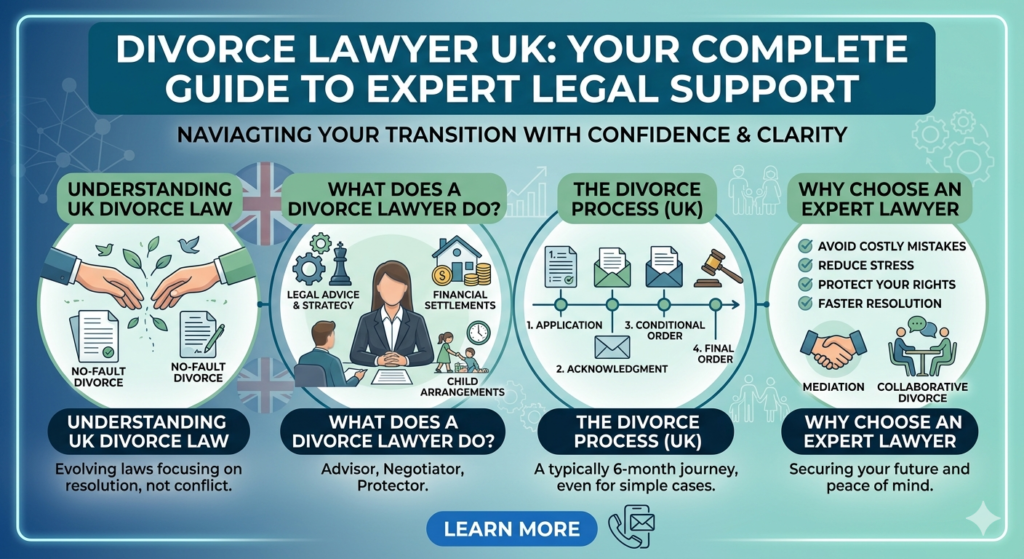
A divorce lawyer in the UK is not just a legal representative—they are your advisor, negotiator, and protector during one of life’s most challenging transitions. Whether you’re considering separation, already in the process, or simply exploring your options, understanding how divorce lawyers work in the UK can empower you to make confident, informed decisions.
Understanding Divorce Law in the UK
Before diving into the role of a divorce lawyer, it’s important to understand the legal framework.
As of April 2022, the UK introduced no-fault divorce, a major reform that changed how couples legally separate. Under this system:
- You no longer need to prove wrongdoing (like adultery or unreasonable behavior).
- Couples can jointly apply for divorce.
- The process is less confrontational and more focused on resolution.
This shift aims to reduce conflict and encourage cooperation, especially when children are involved.
However, even with simplified laws, divorce still involves complex legal, financial, and emotional considerations—this is where a divorce lawyer becomes essential.
What Does a Divorce Lawyer Do?
A divorce lawyer specializes in family law and provides legal support throughout the separation process. Their role goes far beyond paperwork.
1. Legal Advice and Strategy
Every divorce is unique. A lawyer assesses your situation and advises on the best course of action—whether that’s mediation, negotiation, or court proceedings.
2. Filing and Documentation
Divorce involves legal documents such as:
- Divorce application
- Financial statements
- Child arrangement agreements
Mistakes in paperwork can delay your case. A lawyer ensures everything is accurate and submitted on time.
3. Financial Settlements
One of the most critical aspects of divorce is dividing assets. This includes:
- Property
- Savings and investments
- Pensions
- Debts
Your lawyer helps ensure a fair settlement based on UK law.
4. Child Arrangements
If children are involved, the court prioritizes their welfare. A divorce lawyer helps establish:
- Living arrangements
- Contact schedules
- Financial support
5. Negotiation and Representation
Most divorces are settled outside court. Lawyers negotiate on your behalf to reach agreements that protect your interests. If necessary, they represent you in court.
Why You Need a Divorce Lawyer
Some people consider handling divorce without legal help to save money. While possible in simple cases, it can be risky.
Avoid Costly Mistakes
A poorly negotiated settlement can have long-term financial consequences. A lawyer ensures nothing is overlooked.
Reduce Stress
Divorce is emotionally draining. Having a professional handle legal matters allows you to focus on your well-being.
Protect Your Rights
Without legal knowledge, you may agree to unfair terms. A lawyer ensures your rights are upheld.
Faster Resolution
Experienced lawyers know how to avoid delays and move your case forward efficiently.
Types of Divorce Lawyers in the UK
Not all divorce lawyers are the same. Choosing the right type depends on your situation.
1. Family Law Solicitors
These are the most common. They handle all aspects of divorce, including finances and child arrangements.
2. Collaborative Lawyers
They focus on resolving disputes without going to court. Both parties agree to work together with their lawyers to reach a settlement.
3. Mediation Specialists
Some lawyers are trained mediators who help couples resolve issues amicably.
4. High-Net-Worth Divorce Lawyers
For complex cases involving significant assets, businesses, or international elements.
The Divorce Process in the UK
Understanding the steps involved can help you feel more in control.
Step 1: Application
One or both spouses apply for divorce online or via paper form.
Step 2: Acknowledgment
The other party confirms receipt of the application.
Step 3: Conditional Order
Previously called “decree nisi,” this confirms the court sees no reason to prevent the divorce.
Step 4: Final Order
Formerly “decree absolute,” this legally ends the marriage.
The entire process typically takes at least 6 months, even in straightforward cases.
Financial Settlements Explained
Financial matters are often the most contentious part of divorce.
What Can Be Divided?
- Family home
- Savings and investments
- Pensions
- Business assets
Factors Considered by the Court
- Length of the marriage
- Income and earning capacity
- Standard of living
- Contributions (financial and non-financial)
- Needs of children
Consent Orders
Once an agreement is reached, it is formalized in a consent order, making it legally binding.
Child Custody and Support
In UK law, the term “custody” is no longer used. Instead, it’s referred to as child arrangements.
Key Considerations
- The child’s welfare is the top priority
- Both parents are encouraged to remain involved
- Stability and routine are important
Child Maintenance
The parent who does not live with the child usually pays maintenance. This can be arranged:
- Privately
- Through the Child Maintenance Service (CMS)
Costs of Hiring a Divorce Lawyer in the UK
Legal fees can vary widely depending on complexity.
Typical Costs
- Hourly rates: £150–£500+
- Fixed-fee services: Available for simple divorces
- Court fees: Around £593 (subject to change)
Ways to Reduce Costs
- Choose mediation where possible
- Be organized with documents
- Avoid unnecessary disputes
How to Choose the Right Divorce Lawyer
Selecting the right lawyer is crucial.
Look for Experience
Choose someone who specializes in family law.
Check Reputation
Read reviews and testimonials.
Communication Style
You need a lawyer who listens and explains clearly.
Transparency in Fees
Make sure you understand how you’ll be charged.
Comfort Level
You should feel comfortable discussing personal matters with them.
Alternatives to Court
Not all divorces need to go to court.
Mediation
A neutral mediator helps both parties reach an agreement.
Collaborative Divorce
Both parties and their lawyers commit to resolving issues without litigation.
Arbitration
A private process where an arbitrator makes a binding decision.
These options are often faster, cheaper, and less stressful.
Emotional Impact of Divorce
Divorce isn’t just legal—it’s deeply emotional.
Common Feelings
- Sadness
- Anger
- Anxiety
- Relief
Coping Strategies
- Seek support from friends and family
- Consider counseling
- Focus on self-care
- Take time to adjust
A good divorce lawyer understands this and provides not just legal support, but reassurance during difficult times.
Divorce and Property in the UK
Property division can be complex, especially if you own a home.
Options Include:
- Selling the property and dividing proceeds
- One partner buying out the other
- Delaying sale until children are older
Your lawyer helps determine the best solution based on your circumstances.
International Divorce Cases
If you or your spouse have connections to another country, things can get complicated.
Issues May Include:
- Jurisdiction (which country handles the divorce)
- Different legal systems
- Overseas assets
Specialist divorce lawyers handle these cases to ensure your interests are protected globally.
Digital Divorce Services in the UK
Technology has transformed legal services.
Online Divorce Platforms
Many law firms now offer:
- Online consultations
- Digital document submission
- Fixed-fee packages
This makes the process more accessible and convenient.
Common Mistakes to Avoid
Rushing Decisions
Take time to understand your options.
Letting Emotions Drive Choices
Stay focused on long-term outcomes.
Hiding Assets
This can lead to legal penalties.
Ignoring Legal Advice
Your lawyer’s guidance is crucial.
Future of Divorce Law in the UK
The introduction of no-fault divorce is just the beginning. The legal system continues to evolve to:
- Reduce conflict
- Protect children
- Streamline processes
Divorce lawyers are adapting by focusing more on negotiation and less on litigation.
Final Thoughts
Divorce is never easy, but the right support can make it manageable. A skilled divorce lawyer in the UK provides clarity, protection, and guidance during a time of uncertainty.
Whether your case is simple or complex, amicable or contested, having a professional by your side ensures that your rights are protected and your future is secure.
If you’re considering divorce, don’t navigate it alone. Seek expert legal advice, understand your options, and take the first step toward a new beginning with confidence.