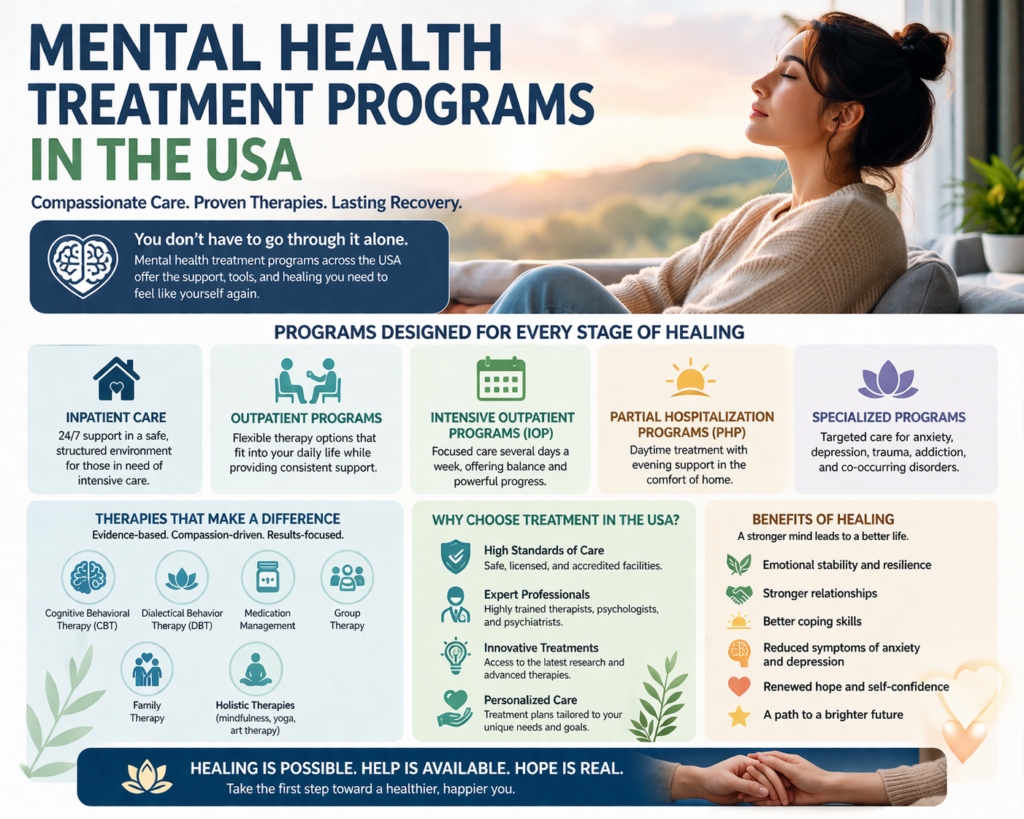
In today’s fast-moving world, mental health is no longer a silent struggle—it’s a priority. Across the United States, mental health treatment programs are evolving rapidly, offering compassionate care, advanced therapies, and personalized solutions for individuals seeking a better quality of life.
Whether someone is dealing with anxiety, depression, trauma, or more complex conditions, the USA provides a wide spectrum of mental health treatment programs designed to heal the mind, restore balance, and empower individuals to thrive.
🌿 Understanding Mental Health Treatment Programs
Mental health treatment programs are structured services that help individuals manage emotional, psychological, and behavioral challenges. These programs vary in intensity, duration, and approach, ensuring that every person can find care tailored to their unique needs.
They are designed not just to treat symptoms—but to address root causes, build resilience, and promote long-term wellness.
🧠 Types of Mental Health Treatment Programs in the USA
The USA offers diverse treatment options to meet different levels of care:
- Inpatient (Residential) Treatment
This is the most intensive level of care, where individuals stay at a facility 24/7. It is ideal for those facing severe mental health conditions or crises.
Key benefits:
- Constant medical supervision
- Structured daily routines
- Immediate support during emergencies
- Outpatient Programs
Outpatient programs allow individuals to live at home while attending therapy sessions regularly.
Perfect for:
- Mild to moderate conditions
- People balancing work, school, or family
- Intensive Outpatient Programs (IOP)
IOPs offer a middle ground between inpatient and standard outpatient care. Patients attend therapy several times a week for a few hours each day.
Advantages:
- Flexible scheduling
- Strong support without full hospitalization
- Partial Hospitalization Programs (PHP)
These programs provide a high level of care during the day while allowing patients to return home at night.
Ideal for:
- Those transitioning from inpatient care
- Individuals needing structured support
- Specialized Programs
Many centers offer targeted treatments for specific conditions, including:
- Anxiety disorders
- Depression
- PTSD (trauma-related care)
- Substance abuse and dual diagnosis
💬 Therapies Used in Mental Health Programs
Modern mental health programs in the USA use evidence-based therapies combined with holistic approaches:
✔ Cognitive Behavioral Therapy (CBT)
Helps individuals identify and change negative thought patterns.
✔ Dialectical Behavior Therapy (DBT)
Focuses on emotional regulation and coping skills.
✔ Medication Management
Psychiatrists may prescribe medications when necessary to stabilize symptoms.
✔ Group Therapy
Provides peer support and shared experiences, reducing feelings of isolation.
✔ Family Therapy
Involves loved ones in the healing process for stronger support systems.
✔ Holistic Therapies
Includes mindfulness, yoga, art therapy, and meditation for overall well-being.
🌟 Why Choose Mental Health Treatment in the USA?
The United States stands out globally for its advanced mental healthcare system:
🏥 High Standards of Care
Facilities follow strict guidelines to ensure patient safety and quality treatment.
👩⚕️ Expert Professionals
Licensed therapists, psychologists, and psychiatrists provide specialized care.
🔬 Innovative Treatments
From teletherapy to cutting-edge research-based methods, patients benefit from the latest advancements.
🧩 Personalized Care Plans
Each treatment plan is customized based on individual needs, history, and goals.
💰 Cost of Mental Health Treatment Programs
Costs can vary depending on the type of program and facility:
- Inpatient Programs: $6,000 – $30,000 per month
- Outpatient Therapy: $100 – $300 per session
- IOP/PHP Programs: $3,000 – $10,000 per month
💡 Many facilities accept insurance, and financial assistance options are often available.
❤️ Benefits of Mental Health Treatment Programs
Seeking help is a powerful step. These programs offer life-changing benefits:
- Improved emotional stability
- Better coping skills
- Stronger relationships
- Increased self-awareness
- Reduced symptoms of anxiety and depression
- Enhanced quality of life
⚠️ When Should You Seek Help?
It’s important to recognize when professional support is needed. Consider seeking help if you experience:
- Persistent sadness or anxiety
- Difficulty functioning in daily life
- Changes in sleep or appetite
- Withdrawal from social activities
- Thoughts of self-harm
Early intervention can make a significant difference in recovery.
🛠️ How to Choose the Right Program
Finding the right mental health program can feel overwhelming, but these tips can help:
✔ Assess Your Needs
Understand whether you need intensive care or flexible outpatient support.
✔ Check Credentials
Ensure the facility is licensed and staff are qualified professionals.
✔ Read Reviews
Patient experiences can offer valuable insights.
✔ Consider Location
Choose a facility that is accessible or offers virtual care options.
✔ Ask Questions
Don’t hesitate to ask about therapies, duration, and success rates.
🌈 Breaking the Stigma Around Mental Health
One of the biggest barriers to seeking help is stigma. But times are changing. More people are speaking openly about mental health, encouraging others to do the same.
Remember:
- Seeking help is a sign of strength, not weakness
- You are not alone in your journey
- Recovery is possible with the right support
🧘 Life After Treatment
Mental health treatment doesn’t end when a program is completed. Aftercare is crucial for maintaining progress.
Aftercare may include:
- Continued therapy sessions
- Support groups
- Healthy lifestyle habits
- Stress management techniques
Building a routine that supports mental well-being is key to long-term success.
🎯 Final Thoughts
Mental health treatment programs in the USA offer hope, healing, and transformation for individuals from all walks of life. With a wide range of options, expert care, and innovative approaches, these programs empower people to regain control of their lives and move forward with confidence.
Taking the first step might feel difficult—but it’s also the most important. Whether you’re seeking help for yourself or a loved one, know that support is available, recovery is real, and a brighter future is within reach.
✨ Your mental health matters. Investing in it is one of the most powerful decisions you can make.