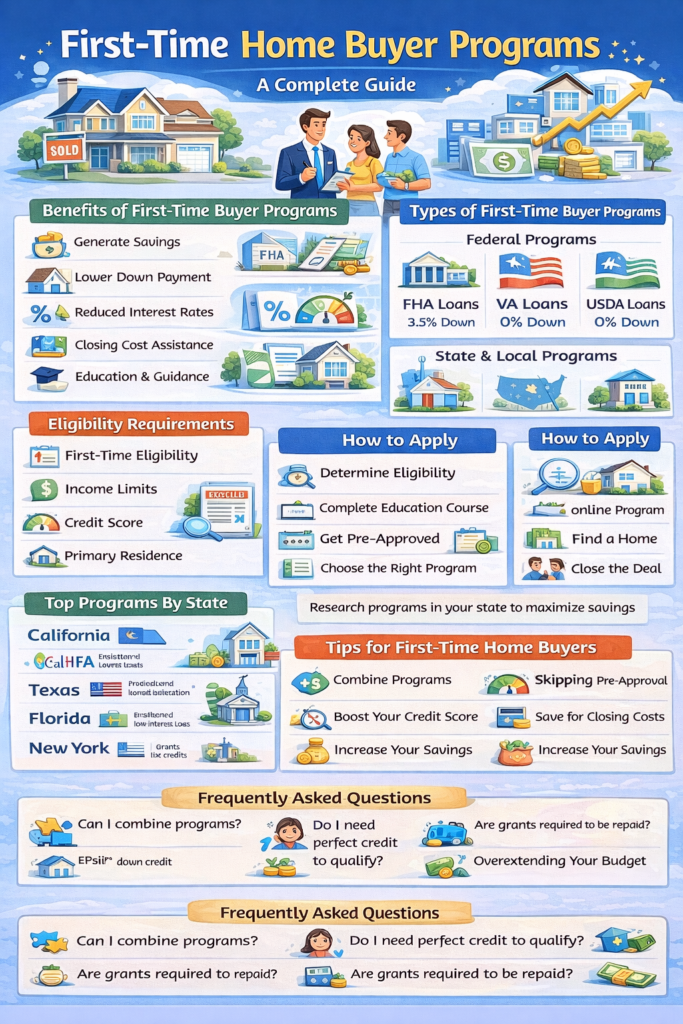
Buying your first home can be an exciting yet daunting experience. With rising property prices, fluctuating interest rates, and complex financing options, many first-time buyers struggle to navigate the homebuying process. Fortunately, there are a variety of first time home buyer programs in the USA designed to make the dream of homeownership more attainable.
In this comprehensive guide, we’ll explore what first-time home buyer programs are, the types available, eligibility requirements, benefits, step-by-step application tips, and expert strategies to maximize your savings.
What Are First Time Home Buyer Programs?
First time home buyer programs are initiatives offered by federal, state, and local governments, as well as lenders, to assist new buyers in purchasing their first home. These programs can provide:
- Down payment assistance
- Reduced interest rates
- Closing cost assistance
- Tax incentives
The goal is to make homeownership more affordable, particularly for low- to moderate-income individuals and families.
Why First Time Home Buyer Programs Are Important
Buying your first home is one of the largest financial commitments you’ll make. First-time buyer programs help:
- Lower upfront costs, making it easier to enter the housing market
- Reduce monthly mortgage payments through lower interest rates
- Provide educational resources to make informed decisions
- Encourage long-term financial stability
For many Americans, these programs can mean the difference between renting for years or finally owning a home.
Types of First Time Home Buyer Programs in the USA
1. Federal Programs
FHA Loans
Backed by the Federal Housing Administration, FHA loans are popular among first-time buyers. Benefits include:
- Down payments as low as 3.5%
- Flexible credit score requirements
- Assumable loans
VA Loans
Available for veterans, active-duty service members, and eligible spouses:
- No down payment required
- No private mortgage insurance (PMI)
- Competitive interest rates
USDA Loans
For buyers in eligible rural areas:
- 100% financing (no down payment)
- Reduced mortgage insurance costs
- Income eligibility requirements
2. State and Local Programs
Many states offer first-time buyer programs that include:
- Down payment assistance grants
- Low-interest mortgage loans
- Homebuyer education classes
- Tax credits for eligible buyers
Examples include:
- California Housing Finance Agency (CalHFA)
- Texas First Time Homebuyer Program
- New York State Homes and Community Renewal (HCR)
Each program has unique eligibility criteria, so researching your state’s options is critical.
3. Lender-Specific Programs
Some banks and mortgage companies offer special first-time buyer programs:
- Reduced interest rates
- Flexible underwriting
- Cash-back at closing
- Low or no fees
Many online lenders and credit unions provide programs tailored to first-time buyers.
Eligibility Requirements for First Time Home Buyer Programs
Eligibility varies by program but typically includes:
- First-Time Buyer Status: Most define first-time buyers as someone who hasn’t owned a home in the past 3 years.
- Income Limits: Programs often target low- to moderate-income households.
- Credit Score: Some programs accept lower credit scores, but a higher score can secure better rates.
- Property Requirements: Programs may limit eligibility to primary residences and specific areas.
- Homebuyer Education: Many programs require completion of a certified homebuyer education course.
Benefits of First Time Home Buyer Programs
1. Lower Down Payment Requirements
Many programs allow as little as 3–5% down, reducing upfront financial strain.
2. Reduced Interest Rates
Government-backed loans often provide lower interest rates than conventional mortgages.
3. Closing Cost Assistance
Some programs offer grants or forgivable loans to cover closing costs.
4. Tax Benefits
Certain programs provide tax credits or deductions, lowering overall costs.
5. Education and Guidance
Programs often include counseling to educate buyers on budgeting, mortgage management, and long-term financial planning.
How to Apply for First Time Home Buyer Programs
Step 1: Determine Eligibility
Check federal, state, and local programs to see which ones fit your financial situation.
Step 2: Complete a Homebuyer Education Course
Most programs require a certified course to teach budgeting, credit management, and homeownership responsibilities.
Step 3: Get Pre-Approved for a Mortgage
Lenders will assess your income, debt, and credit to determine loan eligibility.
Step 4: Choose the Right Program
Compare benefits, fees, and terms of each program before deciding.
Step 5: Submit Your Application
Provide required documents such as proof of income, employment verification, and tax returns.
Step 6: Find a Home
Work with a real estate agent familiar with first-time buyer programs.
Step 7: Close the Deal
Finalize your mortgage and complete closing paperwork.
Tips for Maximizing First Time Home Buyer Programs
- Combine Programs: Some buyers can combine federal and state programs for maximum savings.
- Boost Your Credit Score: Even small improvements can reduce interest rates.
- Save for Closing Costs: Even with assistance, additional funds may be required.
- Research Property Requirements: Ensure your desired property qualifies for the program.
- Stay Informed on Deadlines: Some programs have limited funding or seasonal enrollment.
Common Mistakes First-Time Homebuyers Make
- Ignoring hidden costs such as insurance, property taxes, and maintenance
- Focusing solely on low down payments without considering total cost
- Skipping pre-approval and homebuyer education
- Not shopping around for the best mortgage lender
- Overextending financially, risking future defaults
Avoiding these pitfalls ensures a smoother path to homeownership.
First Time Home Buyer Programs by State (Highlights)
California
- CalHFA: Offers down payment assistance and low-interest loans.
- Extra help for low-income first-time buyers.
Texas
- Texas First Time Homebuyer Program: Provides grants and favorable loan terms.
New York
- NY State HCR: Grants and mortgage assistance for qualified first-time buyers.
Florida
- Florida Housing Finance Corporation: Down payment and closing cost assistance programs.
Each state may have local programs in addition to federal initiatives. Research your state thoroughly to maximize benefits.
Financing Options for First-Time Buyers
Conventional Loans
- Standard mortgage loans
- Typically require 20% down for full benefits, but some offer lower down payment options.
FHA Loans
- Backed by the federal government
- Ideal for buyers with lower credit scores
VA Loans
- For military personnel
- Zero down payment and no PMI
USDA Loans
- For eligible rural properties
- No down payment, reduced insurance costs
How First-Time Buyer Programs Affect Mortgage Rates
First-time buyer programs can influence mortgage rates in the following ways:
- Lower rates through government backing
- Reduced lender fees
- Ability to qualify for higher-quality loans despite lower credit scores
Programs effectively reduce the total cost of homeownership, making them highly attractive for new buyers.
FAQs About First Time Home Buyer Programs
Q1: Can I use multiple programs at once?
A: Yes, some federal, state, and local programs can be combined for maximum savings.
Q2: Do first-time buyer programs require perfect credit?
A: Not necessarily. Many programs are designed to accommodate lower credit scores, though better credit improves loan terms.
Q3: Are these programs only for new homes?
A: Most programs allow existing homes as long as they are primary residences.
Q4: How much down payment assistance can I get?
A: Assistance varies by program, typically ranging from $3,000 to $15,000 or more.
Q5: Do I have to repay down payment assistance?
A: Some grants are forgivable over time; others are loans with repayment terms.
Final Thoughts
First-time homebuyer programs in the USA are powerful tools to make homeownership affordable and achievable. From federal initiatives like FHA, VA, and USDA loans to state and local programs, these options provide financial support, education, and guidance to navigate the housing market successfully.
By understanding eligibility, comparing programs, improving credit, and using strategic financing, first-time buyers can minimize upfront costs, secure favorable mortgage rates, and enjoy long-term financial stability.
For anyone buying their first home in 2026, taking full advantage of first-time homebuyer programs is a smart, money-saving strategy.