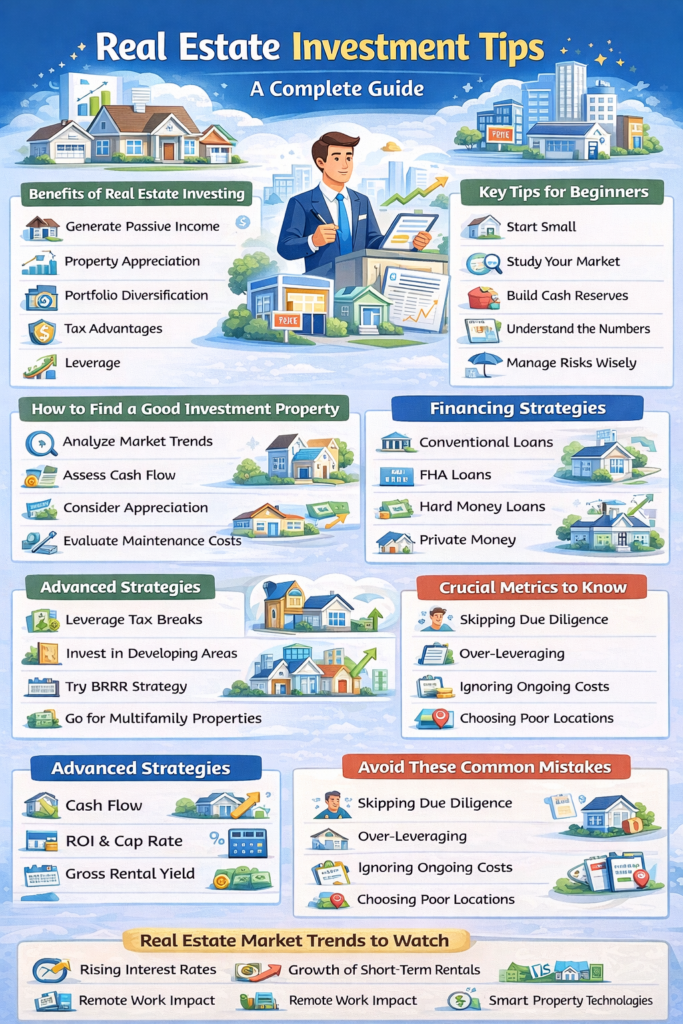
Real estate remains one of the most reliable wealth-building strategies in the USA. Whether you’re a first-time investor or an experienced property owner, knowing the right real estate investment tips can help you maximize profits, reduce risks, and grow your portfolio strategically.
This guide will cover everything you need to know about investing in real estate, including market analysis, property types, financing strategies, risk management, and expert tips for long-term success.
Why Real Estate Investment Is Still Profitable
Real estate has proven to be a resilient investment class, offering:
- Steady Cash Flow: Rental income provides regular cash flow.
- Appreciation: Properties often increase in value over time.
- Tax Benefits: Deductions for mortgage interest, depreciation, and expenses.
- Portfolio Diversification: Real estate reduces reliance on stock market performance.
- Leverage: Borrowing allows investors to purchase larger properties than cash-only buyers.
Understanding how to leverage these benefits requires smart planning, research, and disciplined execution.
Types of Real Estate Investments
1. Residential Properties
Includes single-family homes, condos, townhouses, and multi-family units. Ideal for first-time investors due to lower entry costs.
2. Commercial Properties
Office buildings, retail spaces, warehouses, and industrial properties. Offers higher returns but requires larger capital.
3. Vacation Rentals & Airbnb
Short-term rentals can provide premium income, especially in tourist-heavy areas, but require active management.
4. Real Estate Investment Trusts (REITs)
Publicly traded REITs allow investors to earn dividends from real estate without direct property management.
5. Land Investment
Buying undeveloped land for appreciation or development. Long-term horizon and higher risk.
Key Real Estate Investment Tips for Beginners
1. Start Small
Begin with a single-family home or small multi-family unit. Learn the ropes before scaling to larger properties.
2. Understand Your Market
Research local real estate trends, property prices, vacancy rates, and neighborhood development plans.
3. Location Is Everything
Invest in areas with growing job markets, strong school districts, and low crime rates. High-demand locations ensure better returns.
4. Build a Financial Cushion
Always have reserve funds to cover unexpected repairs, vacancies, or market fluctuations.
5. Learn the Numbers
Understand metrics like cash-on-cash return, capitalization rate, ROI, and gross rental yield.
Financing Your Real Estate Investment
1. Conventional Mortgages
Low-interest loans for primary or investment properties. Often require 20% down for investment homes.
2. FHA Loans
Available for first-time buyers with lower credit scores and down payments.
3. Hard Money Loans
Short-term loans for quick acquisitions or fix-and-flip projects. Higher interest rates but fast approvals.
4. Private Money
Borrowing from friends, family, or private investors. Flexible terms but must maintain trust and transparency.
5. Real Estate Crowdfunding
Invest small amounts in commercial or residential projects through online platforms.
Choosing the Right Investment Property
1. Analyze Cash Flow
Ensure monthly rental income covers mortgage, taxes, insurance, and maintenance.
2. Consider Property Appreciation
Look for properties in growth areas with high potential for value increase over time.
3. Evaluate Maintenance Costs
Older properties may need more repairs. Factor this into your budget.
4. Check Rental Demand
High occupancy rates reduce risk and stabilize income.
5. Assess Property Management Needs
Decide if you will self-manage or hire a professional property manager.
Risk Management in Real Estate Investment
- Diversify Your Portfolio: Don’t rely on one property or market.
- Get Insurance: Protect against natural disasters, liability, and tenant damage.
- Avoid Over-Leverage: High debt increases risk during market downturns.
- Stay Updated on Laws: Zoning, tenant rights, and tax regulations impact returns.
- Have an Exit Strategy: Know when to sell, refinance, or hold based on market conditions.
Advanced Real Estate Investment Tips
1. Leverage Tax Advantages
- Depreciation deductions
- 1031 exchanges for deferring capital gains taxes
- Mortgage interest deductions
2. Invest in Emerging Markets
Look for areas with infrastructure development, tech hubs, or new businesses driving population growth.
3. Explore Multi-Family Units
Multi-family properties generate higher cash flow and reduce vacancy risk.
4. Consider Short-Term Rentals
Platforms like Airbnb can boost income but require active management and marketing.
5. Partner with Other Investors
Pooling resources allows access to larger deals and spreads risk.
Common Mistakes to Avoid in Real Estate Investment
- Buying without market research
- Overestimating rental income
- Ignoring ongoing expenses
- Choosing poor locations
- Failing to perform proper due diligence
Avoiding these mistakes can dramatically improve investment returns.
Real Estate Investment Metrics Every Investor Should Know
1. Cash-on-Cash Return
Measures the cash earned versus cash invested. Helps evaluate rental property performance.
2. Cap Rate (Capitalization Rate)
Net operating income divided by property value. Helps compare property investment potential.
3. Gross Rental Yield
Annual rental income divided by property price. Indicates income potential.
4. ROI (Return on Investment)
Total profit from property divided by total investment, including purchase price and expenses.
5. Debt Service Coverage Ratio (DSCR)
Net operating income divided by annual debt payments. Shows ability to cover mortgage.
Real Estate Market Trends to Watch in 2026
- Rising Interest Rates: Mortgage rates are slightly higher; timing matters.
- Remote Work Impact: Demand for suburban and rural homes increases.
- Short-Term Rentals Growth: Travel recovery fuels Airbnb-style investments.
- Sustainable Properties: Energy-efficient homes gain higher rental and resale value.
- Technology Integration: Virtual tours, smart home systems, and AI property management tools are becoming standard.
Tips for Maximizing Real Estate Investment Returns
- Negotiate Smartly: Always negotiate purchase price and closing costs.
- Renovate Strategically: Focus on improvements that increase value or rental income.
- Maintain Properties Well: Preventive maintenance reduces long-term costs.
- Screen Tenants Carefully: Avoid eviction costs and rental income loss.
- Leverage Technology: Use property management software and market analytics to optimize operations.
Real Estate Investment for Beginners vs Experts
| Feature | Beginners | Experts |
|---|---|---|
| Property Type | Single-family | Multi-family, commercial |
| Investment Size | Small | Large, diversified |
| Risk Level | Moderate | Calculated, higher leverage |
| Learning Curve | High | Experience-based |
| Active Management | Recommended | Sometimes outsource |
Both beginners and experts can achieve strong returns, but approach and strategies differ.
Is Real Estate Investment Worth It in 2026?
Absolutely. Real estate remains a reliable way to build wealth, generate passive income, and protect against inflation. With proper research, financing, and management, investors can achieve:
- Steady cash flow
- Long-term appreciation
- Portfolio diversification
- Tax advantages
Even in competitive markets, smart real estate investment decisions continue to outperform many other asset classes.
Final Thoughts
Investing in real estate is not just about buying property—it’s about strategic planning, market knowledge, financial discipline, and risk management. By following these real estate investment tips, you can maximize returns, minimize risks, and grow your portfolio over time.
Whether you’re starting small with a single-family home or exploring commercial investments, these strategies will guide you toward long-term financial success in real estate.